
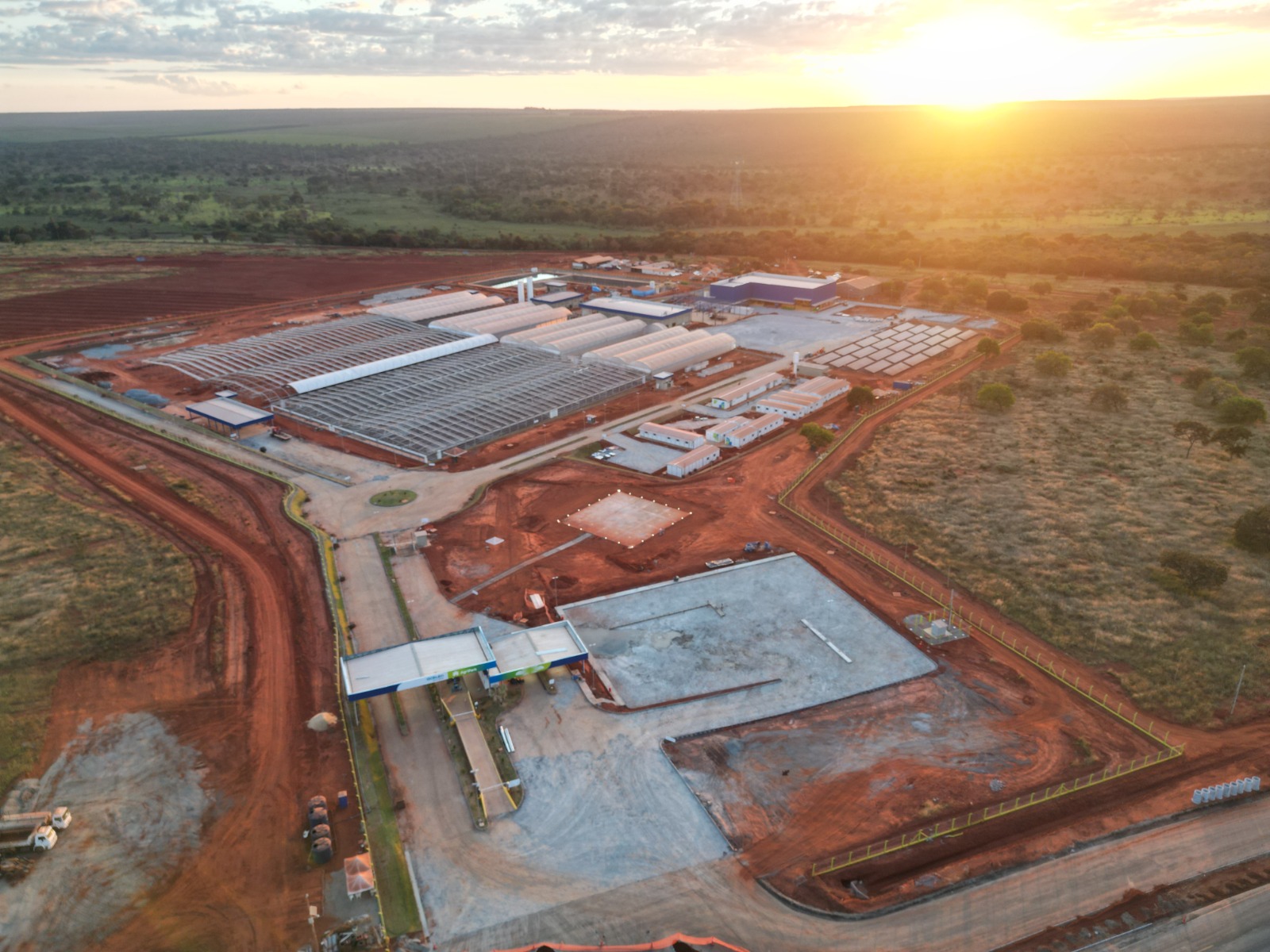
 Mubadala-backed Acelen has secured $1.5 billion to begin construction of a major sustainable aviation fuel and renewable diesel project in Brazil, advancing one of Latin America’s most ambitious attempts to build a large-scale low-carbon fuels platform.
The financing marks the first major funding step for a project expected to cost about $3 billion. The biorefinery is planned for Bahia, beside the Mataripe refinery complex operated by Acelen, and is designed to produce up to 1 billion litres a year of sustainable aviation fuel and renewable diesel when operations begin in 2029.
Acelen’s plan combines industrial processing with agricultural development, using macaúba, a native Brazilian oilseed, alongside soybean oil, used cooking oil and other eligible feedstocks. The company is positioning the project as a “seed-to-fuel” model, linking plantation development, oil extraction, refining and fuel distribution within one supply chain.
Macaúba has become central to the project because it can grow on degraded land and offers high oil yields compared with several conventional crops. Its use also helps Acelen reduce dependence on food-linked feedstocks, a key concern for aviation fuel buyers under tightening sustainability rules. The company has been working on agronomic research, seedling development and partnerships with rural producers to create the feedstock base needed for commercial-scale output.
The project strengthens Mubadala Capital’s role in Brazil’s energy transition strategy. The Abu Dhabi-linked investment platform acquired control of the Mataripe refinery from Petrobras in 2021 and has since sought to turn the Bahia asset into a wider refining and biofuels hub. Mataripe is one of Brazil’s largest refineries and serves fuel markets across the north and northeast of the country.
Brazil offers a favourable backdrop for the project. The country has decades of experience in ethanol and biodiesel, an established agricultural supply chain, large areas of suitable land and growing policy support for lower-carbon fuels. Its Fuel of the Future framework has created national programmes for sustainable aviation fuel and green diesel, giving investors clearer signals on future demand.
Aviation remains one of the hardest transport sectors to decarbonise because aircraft require energy-dense liquid fuels and fleet replacement cycles are long. Sustainable aviation fuel can be used in existing aircraft and airport infrastructure when blended with conventional jet fuel, making it one of the few scalable options available before next-generation aircraft technologies mature.
Global supply, however, remains far below airline demand. SAF still accounts for only a small fraction of jet fuel consumption, while production costs remain higher than fossil-based kerosene. Airlines, airports and regulators have pushed fuel producers to accelerate investments, but projects have often been slowed by permitting, feedstock availability, technology costs and uncertainty over long-term offtake contracts.
Acelen’s Bahia project is expected to use HEFA technology, a commercially established route that processes oils and fats into renewable fuels. The choice lowers technology risk compared with less mature pathways, though it still leaves the company exposed to feedstock competition, certification standards and market price swings.
The cultivation of macaúba will be closely watched. Supporters see the palm as a promising non-food crop that can create rural income and rehabilitate degraded land. Environmental groups and land-use specialists are likely to scrutinise whether plantations avoid pressure on native vegetation, respect local communities and deliver measurable carbon savings across the full supply chain.
The project could also help Brazil build an export platform for aviation fuel markets in Europe, North America and Asia, where mandates and corporate climate commitments are increasing demand. Certification under international sustainability systems will be critical if Acelen is to serve airlines operating across regulated markets.
For Bahia, the investment offers the prospect of industrial jobs, agricultural contracts and new logistics activity around Mataripe. The state has sought to attract energy-transition projects as Brazil’s northeast expands its role in renewables, green hydrogen and biofuels. Acelen’s ability to train suppliers, finance plantations and integrate small and medium-sized producers will influence how widely the economic benefits spread.
Topics
Spotlight