
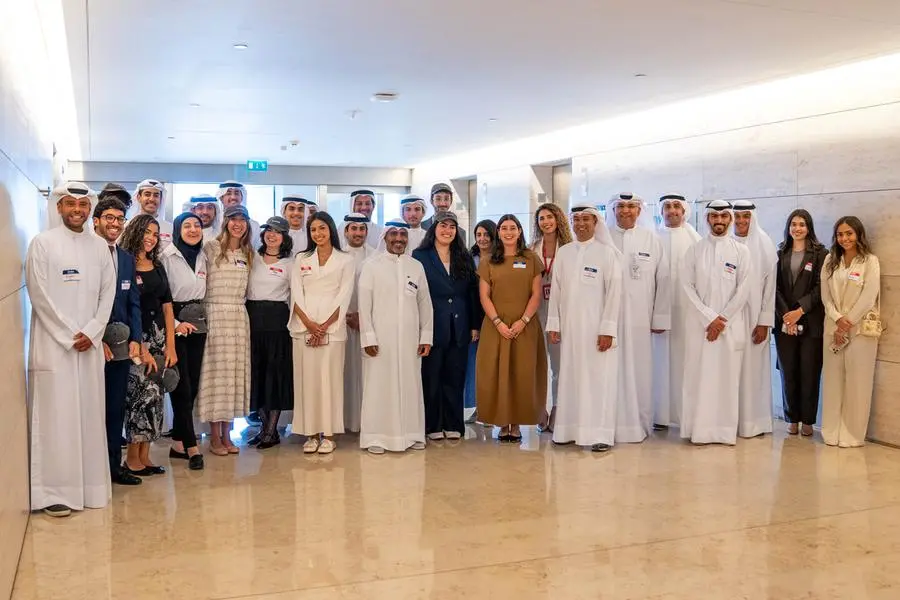
 Kuwait’s private-sector talent drive has gained fresh momentum after Gulf Capital Investment Company KSCC, known as InvestGB, launched the fourth edition of its IGB Internship Program, positioning the scheme as a training route for young Kuwaitis seeking entry into investment, wealth management and financial services. The programme is being presented as part of the company’s broader effort to build a pipeline of national talent while supporting Kuwait’s push to expand citizen participation in private-sector employment.
 InvestGB, the investment arm of Gulf Bank, said the programme offers hands-on training, professional development and possible employment opportunities for participants. Since its first edition in 2023, more than 100 interns have taken part, including high school and university students as well as bachelor’s and master’s degree holders. The company said students from more than 20 local and international universities have joined the initiative, including Kuwait University, Gulf University for Science and Technology, American University of Kuwait, Babson College, Bentley University, Columbia University, Massachusetts Institute of Technology, Cornell University, University of California, Los Angeles, and King’s College London.
The latest edition comes at a time when Kuwait is trying to align education, employment and private-sector development with its long-term economic diversification agenda. Youth unemployment remains a structural concern, with 2025 estimates placing joblessness among those aged 15 to 24 at about 15 per cent. While Kuwait’s public sector has traditionally absorbed many citizens, finance, investment and technology-linked services are increasingly being viewed as areas where private companies can create skilled career paths for graduates.
InvestGB’s programme has also become a recruitment channel. About 10 per cent of participants have joined the company after completing the internship, a conversion rate that gives the initiative a stronger role than conventional short-term work experience. For a specialised investment firm, that figure is significant because entry-level talent in asset management, brokerage, advisory and wealth management requires both technical grounding and exposure to regulatory, client-service and market-risk environments.
Sara Ayman AlMuzaini, Senior Vice-President for Human Resources at InvestGB, said investing in young people was an investment in Kuwait’s future and that the company aimed to connect participants with meaningful career paths. She also described InvestGB as a professional community built around continuous growth and shared purpose. Her remarks underline a wider shift among financial institutions in Kuwait, where graduate development is increasingly tied to retention, diversity and leadership succession rather than short-term staffing needs.
InvestGB’s own workforce figures show why the internship programme is being framed as part of a wider localisation strategy. The company said 61 per cent of its 46 investment professionals are Kuwaiti nationals, women represent 47 per cent of the total workforce, and Kuwaitis hold 80 per cent of executive posts. Those figures place the company’s youth initiative within a broader institutional effort to expand national representation in specialised finance roles, not only in administrative functions.
Gulf Bank introduced InvestGB after securing regulatory approvals from the Capital Markets Authority, the Central Bank of Kuwait and the Ministry of Commerce and Industry. The company operates as a closed joint-stock enterprise with KD10 million in capital and manages assets exceeding KD1 billion, or about $3.2 billion. Its licensed activities include investment portfolio management, investment advisory, custody, collective investment scheme management, subscription agency services and brokerage activities outside the stock exchange.
The internship initiative therefore sits inside a business that has been designed to consolidate Gulf Bank’s investment activities and deepen its non-lending revenue base. For interns, that structure offers exposure to a broader range of financial services than a single-department placement would normally provide. For InvestGB, the benefit lies in assessing young candidates over time, shaping workplace skills early and improving the supply of staff familiar with the company’s operating culture.
Kuwait’s private-sector employers face a growing need to compete for citizens who may otherwise prefer government careers, where job security and benefits have traditionally been stronger. Structured internships can help narrow that gap by giving students clearer information about private-sector roles before graduation. They also allow employers to test aptitude in areas such as research, compliance, client reporting, portfolio support and investment operations.
InvestGB’s previous internship activity included an Intern Day event at its headquarters in Al Hamra Business Tower, where participants met senior leaders from InvestGB and Gulf Bank. The event reflected the company’s attempt to combine training with mentorship and professional networking, an approach increasingly used by financial institutions seeking to retain young talent after work placements end.
Topics
Kuwait