
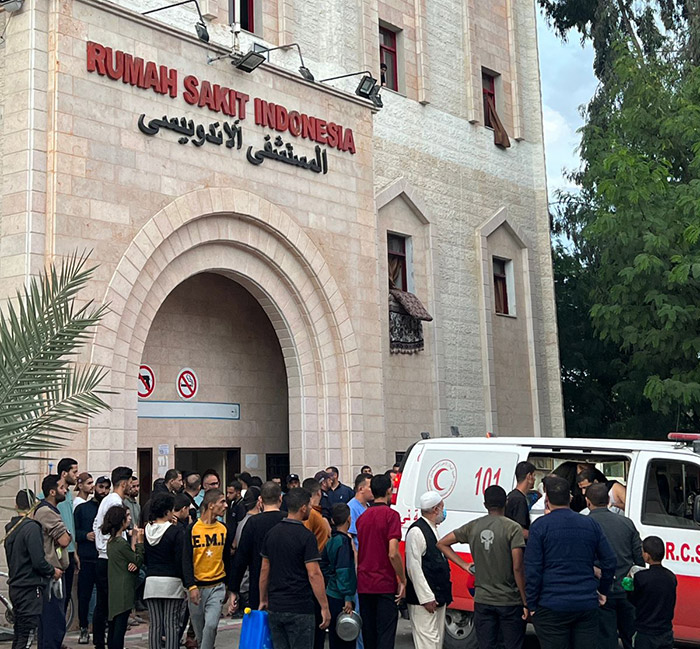
 Indonesia is preparing to dispatch up to 8,000 troops to Gaza by June as part of a proposed peacekeeping effort, with an initial contingent of around 1,000 soldiers expected to be ready for deployment by early April, according to army spokesman Donny Pramono.
The plan, outlined on Monday, signals Jakarta’s intention to play a more active role in international stabilisation efforts linked to the conflict between Israel and Hamas. Officials say the deployment would form part of a broader multinational peacekeeping framework, subject to international agreement and conditions on the ground.
Donny Pramono said preparations were under way to ensure the first batch of personnel could be mobilised swiftly if political and security arrangements were finalised. He added that as many as 8,000 troops had been earmarked for possible rotation by June, reflecting what he described as Indonesia’s commitment to contributing to global peace operations.
Indonesia, the world’s largest Muslim-majority nation, has long voiced strong support for Palestinian statehood and humanitarian relief for civilians in Gaza. While it does not maintain diplomatic relations with Israel, Jakarta has consistently backed United Nations initiatives aimed at securing ceasefires and delivering aid. The proposed troop contribution would mark one of its most significant potential overseas deployments in the Middle East.
Officials indicated that any mission would require a clear international mandate, likely under the auspices of the United Nations or through a multilateral arrangement endorsed by the UN Security Council. Military analysts note that peacekeeping operations in Gaza would face complex operational challenges, including urban density, fragile ceasefire arrangements and the presence of multiple armed factions.
Indonesia has a long record of participating in UN peacekeeping missions. Its forces have served in Lebanon under the United Nations Interim Force in Lebanon, in Congo under MONUSCO, and in other theatres across Africa and Asia. Defence officials have frequently cited these experiences as evidence of the armed forces’ capacity to operate in volatile environments while adhering to international humanitarian law.
The Gaza conflict, which escalated sharply after Hamas launched a large-scale attack on southern Israel in October 2023 and Israel responded with an extensive military campaign, has left tens of thousands dead and displaced a large proportion of the enclave’s population. International efforts to secure sustained ceasefires have produced intermittent pauses in fighting but have not yet yielded a durable political settlement.
Indonesian leaders have repeatedly called for an immediate and permanent ceasefire, expanded humanitarian corridors and renewed negotiations towards a two-state solution. President Joko Widodo has stressed that Jakarta’s engagement must align with international law and respect for Palestinian self-determination.
Military planners in Jakarta are said to be focusing on logistics, rules of engagement and coordination mechanisms with other potential troop-contributing countries. Peacekeeping in Gaza would differ significantly from traditional buffer-zone missions, given the enclave’s small size, high population density and ongoing political tensions. Experts point out that a credible mission would require clear demarcation of authority, robust monitoring mechanisms and assurances from the parties involved.
Regional security observers caution that the viability of any deployment depends on political consensus among major powers and acceptance by Israel and Palestinian authorities. Without such agreement, troops could face heightened security risks or operational constraints that undermine their mandate.
Humanitarian organisations have warned that conditions in Gaza remain severe, with infrastructure heavily damaged and access to food, water and medical supplies constrained. A peacekeeping force, if authorised, could be tasked with monitoring ceasefire lines, protecting humanitarian convoys or supporting reconstruction efforts. However, such roles would need to be precisely defined to avoid mission creep.
Indonesia’s armed forces, known as the Tentara Nasional Indonesia, have in recent years sought to expand their international profile through multilateral exercises and peacekeeping contributions. Defence analysts see the Gaza proposal as part of this broader strategy, balancing domestic expectations of solidarity with Palestinians against the practical realities of overseas military commitments.
At home, public opinion has strongly favoured visible support for Gaza’s civilian population. Large demonstrations have taken place in Jakarta and other cities calling for stronger diplomatic and humanitarian engagement. The government has already dispatched aid shipments and medical assistance teams to Egypt for onward delivery to Gaza.
The prospect of sending thousands of troops underscores the scale of Jakarta’s stated ambition, though officials emphasise that the deployment remains contingent on international approval and security guarantees. Donny Pramono indicated that preparations are being treated as precautionary planning rather than a confirmed operational order.
Topics
World