
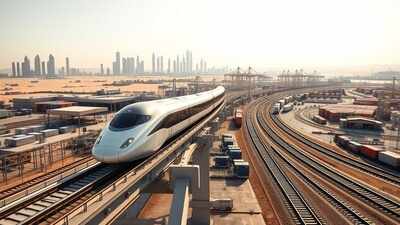
 Saudi Arabia Railways has opened tenders for a 35-kilometre rail segment cutting through Riyadh, marking a pivotal step in the long-delayed Saudi Landbridge scheme aimed at reshaping freight and passenger movement across the kingdom. The new line will connect the existing North-South Railway with the Eastern Railway, forming a strategic junction in the capital that underpins wider plans to link the Red Sea coast with the Gulf.
The tender signals renewed momentum for the Landbridge project, first conceived more than a decade ago to create a continuous rail corridor between Jeddah on the Red Sea and Dammam on the Arabian Gulf. The Riyadh section is considered a technical and logistical linchpin, as it will integrate key national networks operated by Saudi Arabia Railways and streamline cargo flows between industrial hubs, ports and inland logistics centres.
Saudi Arabia Railways, commonly known as Saudi Arabia Railways, has been restructuring and expanding its portfolio as part of the kingdom’s Vision 2030 economic diversification strategy. The Landbridge is designed to reduce reliance on road haulage, ease congestion around ports and urban centres, and cut transit times for goods moving between Asia, Europe and regional markets.
The proposed 35-kilometre link through Riyadh will physically connect the North-South Railway with the Eastern Railway. The North-South Railway, stretching over 2,400 kilometres, primarily carries minerals such as bauxite and phosphate from northern mines to processing facilities and ports, while also providing passenger services. The Eastern Railway connects Riyadh with Dammam and the industrial city of Jubail, serving both freight and commuter traffic.
Transport analysts say integrating these corridors within the capital is critical for operational efficiency. At present, freight movements between networks can require complex manoeuvres or rely on parallel infrastructure. A direct connector would allow through-running of trains, reduce turnaround times and enhance scheduling flexibility.
The broader Landbridge project envisions a 950-kilometre railway linking Jeddah Islamic Port on the Red Sea to Riyadh and onward to Dammam, creating a land-based alternative to maritime routes around the Arabian Peninsula. Officials have argued that the corridor could cut shipping times between the Gulf and Europe by several days, offering a competitive logistics option for container traffic.
The scheme has faced multiple delays since it was first proposed in the mid-2000s, initially structured as a public-private partnership. Shifts in procurement models, oil price volatility and evolving infrastructure priorities slowed progress. Over the past two years, however, authorities have reactivated planning under a revised framework aligned with national transport and logistics strategies.
Under Vision 2030, Saudi Arabia aims to position itself as a global logistics hub bridging three continents. Billions of dollars have been committed to ports, airports, special economic zones and rail infrastructure. The Landbridge complements other flagship transport initiatives, including high-speed passenger services and metro systems in major cities.
Riyadh itself is undergoing extensive transport transformation. The capital’s metro network, developed by the Riyadh Development Authority and operated by international consortia, is expected to reshape urban mobility. While the metro focuses on passenger movement, the Landbridge and associated freight links are intended to underpin industrial growth and supply chains.
Industry experts note that rail freight volumes in the kingdom have risen steadily, driven by mining output, petrochemicals and containerised goods. A more integrated network could support growth in sectors such as automotive assembly, food processing and e-commerce distribution, particularly as new industrial zones are developed around Riyadh.
The tendering of the Riyadh segment is also being viewed in the context of regional competition. Gulf states have invested heavily in port and logistics capacity, and the planned Gulf Railway network seeks to interconnect member states of the Gulf Cooperation Council. A functional Landbridge could enhance Saudi Arabia’s role within this wider system, offering seamless east-west transit and linking into future cross-border routes.
Engineering challenges are expected in threading a new rail line through densely developed parts of Riyadh. Urban interfaces, land acquisition and environmental considerations will require careful planning. Contractors bidding for the project are likely to include both domestic firms and international rail specialists with experience in complex metropolitan works.
Financing arrangements have not been fully detailed, though officials have indicated that a mix of state funding and private sector participation may be deployed. Market observers suggest that investor appetite will depend on clarity over freight demand forecasts, tariff structures and long-term operating frameworks.
Topics
Spotlight