
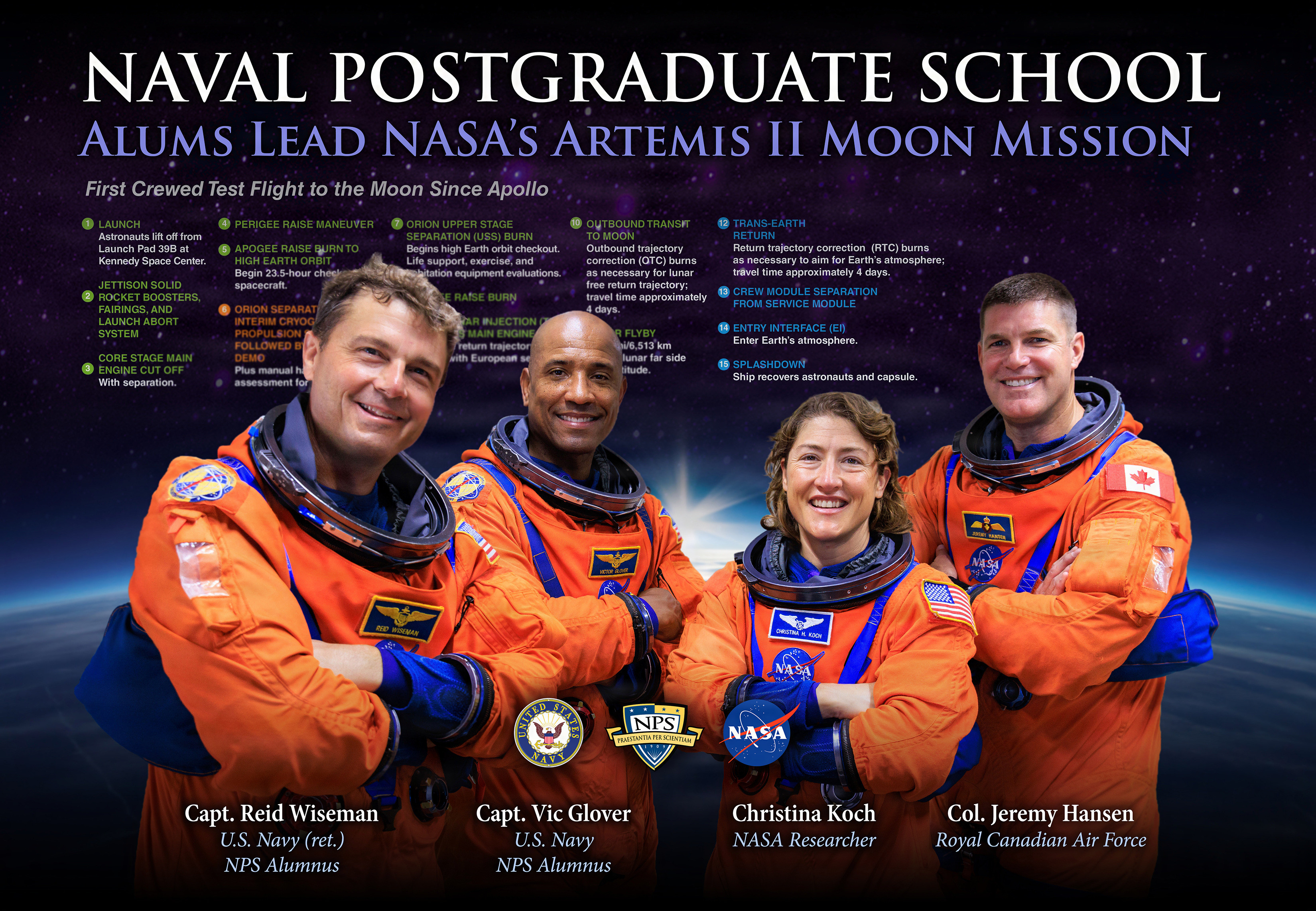
 NASA has launched four astronauts on humanity’s first crewed journey towards the Moon since the Apollo era, sending the Artemis II mission into space aboard the Orion capsule on top of the Space Launch System rocket from Kennedy Space Center in Florida. The flight lifted off on 1 April and set a 10-day path that will take the crew around the Moon and back, marking the first time people have headed into lunar vicinity in more than half a century.
 The crew comprises commander Reid Wiseman, pilot Victor Glover, mission specialist Christina Koch and Canadian Space Agency astronaut Jeremy Hansen. Their flight carries historical weight beyond the timing of the mission: Koch is the first woman assigned to a lunar mission, Glover the first Black astronaut to travel towards the Moon, and Hansen the first Canadian and first non-American to do so. The mission is designed as a test flight rather than a landing attempt, with Orion expected to loop around the Moon before returning for a Pacific splashdown.
Artemis II is the first crewed mission of NASA’s Artemis programme and follows Artemis I, the uncrewed test flight that flew around the Moon in 2022. This mission is intended to prove the performance of Orion’s life-support systems, navigation, communications and manual handling capabilities in deep space before later missions attempt to place astronauts on the lunar surface. NASA lists the Artemis II mission duration at about 10 days, with the spacecraft travelling farther than any crewed vehicle has gone beyond the Moon’s far side before heading home.
Launch day carried political as well as scientific resonance. President Donald Trump hailed the mission after liftoff, while NASA presented it as a defining milestone for the agency after years of schedule slippages, engineering scrutiny and budget debates around the SLS rocket and Orion spacecraft. Artemis has become a flagship project for Washington’s civil space effort, not only because it aims to return astronauts to the lunar environment, but also because it is meant to establish the hardware, partnerships and operating experience for a longer-term human presence on and around the Moon.
That broader objective places Artemis at the centre of a changing space race. NASA and its international partners are working against a backdrop of accelerating lunar ambitions from China, which has set out plans for a crewed lunar landing by 2030. Artemis is therefore being watched as both an exploration programme and a strategic signal about leadership in deep space, standards-setting and the future shape of lunar activity. Unlike Apollo, which was driven by Cold War urgency and short-duration missions, Artemis is framed as an effort to build a more sustained architecture involving governments and commercial industry.
Commercial involvement has become one of the programme’s defining features. While Artemis II flies on legacy-style hardware built through major government contracts led by Boeing, Northrop Grumman and Lockheed Martin, later stages of the Moon campaign depend heavily on private-sector systems, including lunar landers being developed by SpaceX and Blue Origin. That has sharpened debate over the future of SLS itself, which has faced criticism over cost and its reliance on expendable hardware at a time when reusable launch systems are reshaping the economics of spaceflight. Reuters reported that SLS missions can cost several billion dollars each, underscoring why Artemis II is being watched as a test not just of engineering but of the programme’s long-term political durability.
For NASA, the mission also carries symbolic force in the way it presents the next chapter of lunar exploration. Apollo’s Moon crews were all white American men. Artemis II places a broader coalition at the centre of the story, blending U. S. and Canadian participation with a crew chosen to reflect a different era of spaceflight. That symbolism matters for a programme designed to sustain public support over many years, particularly as governments seek to justify the costs of deep-space missions against domestic fiscal pressures.
Technical confidence will matter more than symbolism over the coming days. Early mission updates from NASA said the crew had completed an apogee-raise burn and was preparing for proximity operations, part of the careful sequence of tests meant to validate spacecraft handling before Orion heads deeper into space. NASA and outside analysts will be watching every stage closely, from propulsion and communications to crew health and onboard systems performance. Any serious anomaly would echo through the timetable for the missions that follow.
Topics
World