
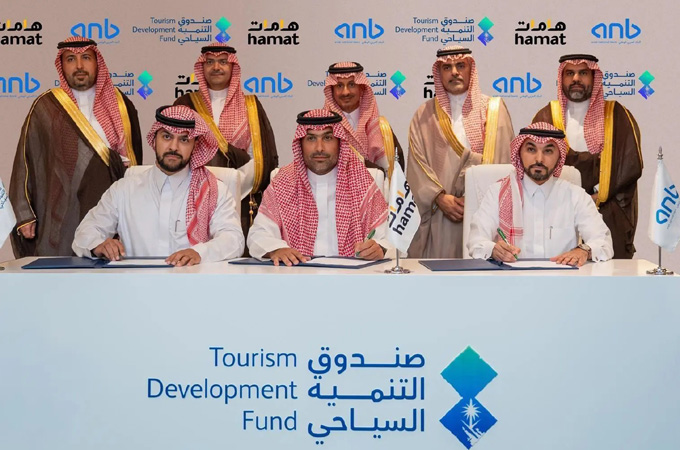
 Saudi Arabia’s Tourism Development Fund has signed a $250 million financing agreement with Arab National Bank and Hamat Holding to advance the development of Masar Mall, a flagship retail and lifestyle project in Makkah. The deal underscores the kingdom’s push to strengthen tourism infrastructure as part of Vision 2030, with the fund playing a central role in mobilising private capital into large-scale hospitality and commercial ventures.
TDF said the financing package would support construction and fit-out of the premium retail destination, which forms part of the broader Masar Destination masterplan near the Grand Mosque. The Masar scheme, led by Umm Al Qura for Development and Construction, aims to transform the western approach to Makkah into a mixed-use corridor comprising hotels, residential units, transport links and commercial assets designed to serve pilgrims and visitors.
Masar Mall is positioned as a high-end shopping and leisure complex intended to cater to millions of religious tourists who travel to the city annually for Hajj and Umrah. Saudi authorities have set ambitious targets to increase the number of pilgrims and international visitors over the next decade, and retail infrastructure is viewed as a key component of enhancing visitor experience and lengthening stays.
The Tourism Development Fund, established in 2020 under the Ministry of Tourism, has become a major financier of projects aligned with the kingdom’s diversification strategy. It provides debt financing, guarantees and advisory services to stimulate private-sector participation in tourism-related developments. Officials have repeatedly stated that the fund’s mandate is not only to deploy capital but also to reduce perceived investment risk in priority sectors.
Arab National Bank, one of the country’s established commercial lenders, joins the project as a financing partner, while Hamat Holding brings experience in retail real estate development and management. Hamat operates and develops shopping centres across several Saudi cities and has sought to position itself as a key player in modern retail formats that blend shopping with entertainment and hospitality.
The financing agreement reflects broader trends in Saudi Arabia’s property and retail markets. Over the past several years, the government has accelerated spending on giga-projects and urban regeneration schemes, aiming to expand non-oil revenue streams and generate employment. Makkah and Madinah occupy a strategic place in this agenda because of their status as religious tourism hubs. Infrastructure upgrades in transport, accommodation and commercial services have been prioritised to accommodate growing visitor volumes.
Industry analysts note that retail development in pilgrimage cities carries distinct characteristics compared with other urban markets. Demand is closely linked to seasonal peaks, religious calendars and the spending patterns of international pilgrims. Developers must balance premium positioning with accessibility and cultural considerations. Masar Mall’s scale and location are designed to tap into footfall generated by new transport corridors and hotel clusters within the Masar masterplan.
Saudi Arabia has reported a significant rise in tourism numbers since the introduction of new visa regimes and the easing of travel restrictions. Authorities have stated that the country aims to attract 150 million visits annually by 2030, including domestic and international tourists. Religious tourism remains a cornerstone of that target, but leisure and business travel are also being promoted through events, entertainment offerings and heritage projects.
Financing structures for large developments have evolved as banks and state-backed entities share risk. TDF’s participation is intended to catalyse private lending by signalling government support and project viability. Market observers say such partnerships are critical at a time when global financing conditions remain sensitive to interest rate movements and construction cost pressures.
Hamat Holding has indicated in past disclosures that it focuses on creating destinations that combine retail, dining and entertainment to increase dwell time and tenant performance. In the context of Makkah, this approach may include integrating services tailored to pilgrims, such as prayer facilities, culturally appropriate retail brands and hospitality-linked amenities. The mall is expected to host a mix of international and regional retailers, alongside food and beverage outlets.
Urban planners point out that the Masar corridor is also intended to improve traffic flow and pedestrian access around central Makkah. By relocating certain services and commercial activities into purpose-built zones, authorities aim to ease congestion near the Grand Mosque while providing modern facilities for visitors. Masar Mall is one of the commercial anchors within that framework.
TDF’s chief executive has previously emphasised that the fund measures success not only in financial returns but also in its contribution to sustainable tourism growth. Projects supported by the fund are expected to align with environmental and social standards set out in national strategies. Developers are increasingly incorporating energy-efficient systems and smart technologies into large retail complexes, reflecting both regulatory requirements and shifting consumer expectations.
Topics
Spotlight