
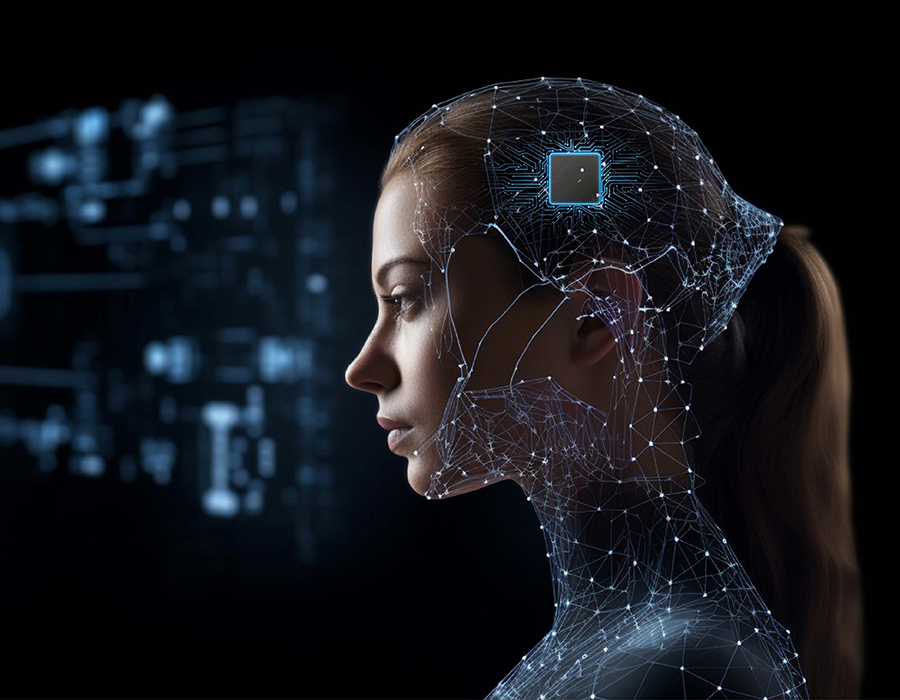
 Neuralink’s brain implant programme is moving from a striking laboratory concept to a broader clinical effort, with the company saying in January that 21 participants had been enrolled in trials worldwide as it marked two years since testing in humans began. The expansion has sharpened attention on a fast-developing corner of neurotechnology that aims to let people with severe paralysis control computers and other devices directly through neural signals, while also reviving concerns over safety, durability and how far such systems should reach beyond medical use.
 At the centre of the debate is a simple but powerful promise: restoring autonomy. Neuralink says people in its clinical trials are using its devices to control computers and robotic arms with their thoughts, and the company has launched multiple studies around that goal. Its PRIME study has focused on enabling people with paralysis to use digital devices, while the CONVOY study was introduced to explore whether participants could extend that control to assistive robotic systems. The company has also signalled ambitions in vision restoration, underscoring that its commercial narrative stretches well beyond cursor movement on a screen.
That medical promise is not theoretical. Neuralink’s first human implant in early 2024 was followed by demonstrations showing the participant moving a laptop cursor, browsing the internet, posting on social media and playing video games through the device. Reuters reported in August 2024 that the second trial implant had avoided a complication seen in the first patient, where some tiny threads retracted after surgery and reduced the number of working electrodes. The company said it had adjusted surgical and engineering measures to reduce brain motion and improve performance. That sequence matters because it shows both the pace of progress and the reality that this remains an experimental technology still being refined in live clinical settings.
The wider field is advancing at the same time, and that gives needed context to some of the bolder claims around “thought control”. Academic research has already shown that brain-computer interfaces can do more than point and click. A Nature study in 2023 reported a high-performance speech neuroprosthesis capable of decoding unconstrained sentences from neural activity at 62 words per minute, while a 2024 New England Journal of Medicine study described a rapidly calibrating speech neuroprosthesis that achieved a low average word error rate in a participant with paralysis. Researchers at UC Berkeley and UC San Francisco also reported in 2025 that a brain-to-voice system could stream more naturalistic speech in real time. Those advances suggest the field is edging from basic command execution towards digital communication that feels less mechanical and more immediate.
Neuralink has tried to position itself at the front of that shift. In May 2025, Reuters reported that the company had received a US Food and Drug Administration breakthrough-device designation for a system intended to restore communication for people with severe speech impairment. The FDA says its breakthrough programme is designed to speed development and review for certain devices addressing life-threatening or irreversibly debilitating conditions, though such designation is not the same as full market approval. For investors, patients and regulators, that distinction is crucial: the label may accelerate the path, but it does not settle long-term questions over effectiveness or risk.
Those risks remain substantial. Reviews of invasive brain-computer interfaces note hazards that come with implanting electrodes into brain tissue, including infection, bleeding, inflammation, scar formation and the possibility that device performance may degrade over time as the brain and implant interact. Reuters reported that Neuralink had grappled for years with the thread-retraction issue later seen in its first patient, and said the FDA had been aware of that problem from animal-testing results. Neuralink has said it has maintained zero serious device-related adverse events, but durability and safety will be judged over years, not product cycles.
Ethical concerns are moving in parallel with the science. Scholars examining implantable brain interfaces have pointed to unresolved questions around privacy, autonomy, informed consent, inequality of access and the commercial handling of neural data. Some argue that the technology can restore personhood and agency for people cut off from speech or movement; others warn that commercial rhetoric can run ahead of what the systems can reliably do. That tension is especially sharp in language such as “thought control”, which captures public imagination but can blur the line between decoding intended motor or speech signals and reading the full content of a person’s mind. Current systems are far narrower than that phrase suggests. They are trained, task-specific interfaces, not general-purpose mind readers.
Topics
Technology