
BankDhofar has been named Best Trade Finance Bank Oman 2025 at the Global Banking & Finance Awards, giving the Muscat-listed lender another external endorsement in a year when Omani banks have been trying to turn stronger domestic fundamentals, digital upgrades and cross-border business demand into higher-value corporate banking growth. The award is listed by both the bank and the awards organiser, with Bank Dhofar named among the 2025 winners in the Oman trade finance category.
For BankDhofar, the distinction matters less as a trophy than as a signal to corporate clients operating in import, export, contracting and supply-chain businesses, where speed of document handling, correspondent-bank reach, risk mitigation and working-capital support often decide which lender wins mandates. Trade finance has become a competitive field across the Gulf as banks seek fee income beyond plain-vanilla lending and as clients demand faster, more digital processing of letters of credit, guarantees and collections. The bank had already secured recognition in late 2024 from Global Trade Review as best trade finance bank in Oman, suggesting that its trade franchise has been building momentum rather than relying on a one-off accolade.
BankDhofar’s own disclosures show that trade and transaction banking have become more central to its wholesale strategy. In its 2025 annual report, the bank said its transaction banking and trade finance division is focused on helping corporate, SME and government clients manage collections and payments digitally, improve working capital and mitigate risk while entering new markets and strengthening supply chains. The report also says the bank introduced a trade portal for online letters of credit initiation and amendments, alongside other digital tools such as Easybiz and Easydebit. Those details suggest the lender is positioning trade finance not as a legacy paperwork business but as part of a wider transaction-banking platform.
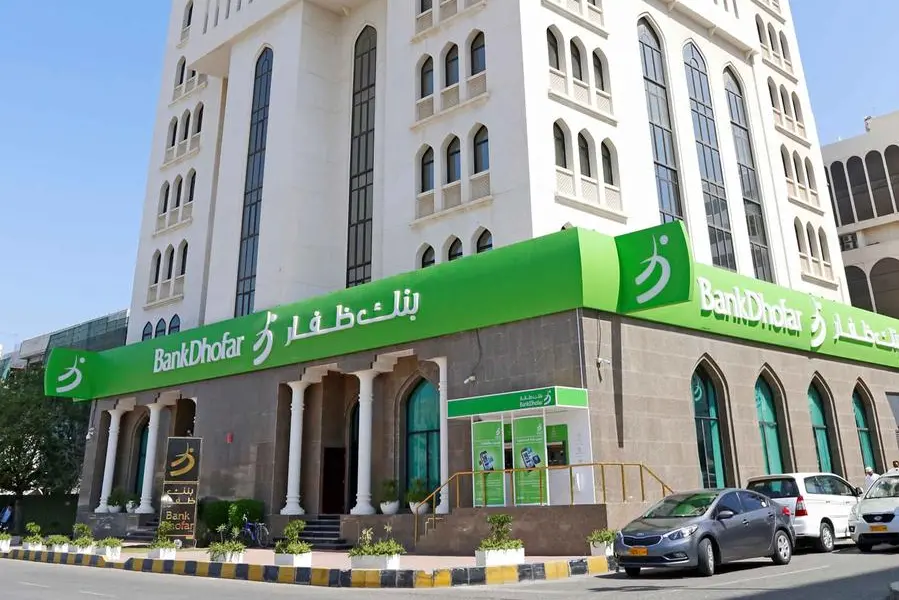
That strategy sits within a stronger financial backdrop. BankDhofar reported net profit of 51.05 million Omani rials for 2025, up 17.06 per cent from the previous year, while its 2025 financial statements also highlighted upgraded digital onboarding, enhanced corporate internet banking and the launch of both a trade finance portal and a merchant portal. The bank said completion of the integration of Bank of Baroda operations in Oman broadened its customer base and strengthened ties that could support correspondent banking and cross-selling opportunities. For a lender trying to deepen trade-related services, scale, network access and operating efficiency are all critical advantages.
The wider Omani setting has also helped. BankDhofar’s annual report pointed to improving sovereign credit conditions, noting Moody’s upgrade of Oman to Baa3 in July 2025 and Fitch’s upgrade to BBB- in December 2025, both with stable outlooks. A firmer macro backdrop can lower perceived country risk, improve business confidence and support trade flows, especially for banks serving companies linked to infrastructure, energy, logistics and industrial expansion. BankDhofar says its corporate and project finance activity spans industrial, infrastructure, social infrastructure and digital-economy segments, sectors closely tied to Oman’s diversification drive under Vision 2040.
Trade finance is also meaningful in balance-sheet terms. The bank’s 2025 financial statements show letters of credit and guarantees forming a sizeable part of non-funded exposure, underlining that the business is not merely a branding exercise. Its annual report says the bank supports customers through funded and non-funded structures and works with a wide network of leading correspondent banks, a necessary feature for a lender serving firms with overseas suppliers and buyers. In practical terms, that means trade finance at BankDhofar is tied to the broader machinery of corporate banking, treasury, liquidity and cross-border settlement.
Still, awards in banking are not a substitute for hard performance data, and investors typically weigh them against profitability, asset quality, execution and client retention. The awards organiser describes its programme as merit-based and widely recognised, but such accolades are ultimately reputation markers rather than regulatory certifications. Even so, in a market where banks compete fiercely for corporate mandates and where service quality can be difficult for outsiders to measure, repeat recognition can strengthen commercial credibility.
For BankDhofar, the distinction matters less as a trophy than as a signal to corporate clients operating in import, export, contracting and supply-chain businesses, where speed of document handling, correspondent-bank reach, risk mitigation and working-capital support often decide which lender wins mandates. Trade finance has become a competitive field across the Gulf as banks seek fee income beyond plain-vanilla lending and as clients demand faster, more digital processing of letters of credit, guarantees and collections. The bank had already secured recognition in late 2024 from Global Trade Review as best trade finance bank in Oman, suggesting that its trade franchise has been building momentum rather than relying on a one-off accolade.
BankDhofar’s own disclosures show that trade and transaction banking have become more central to its wholesale strategy. In its 2025 annual report, the bank said its transaction banking and trade finance division is focused on helping corporate, SME and government clients manage collections and payments digitally, improve working capital and mitigate risk while entering new markets and strengthening supply chains. The report also says the bank introduced a trade portal for online letters of credit initiation and amendments, alongside other digital tools such as Easybiz and Easydebit. Those details suggest the lender is positioning trade finance not as a legacy paperwork business but as part of a wider transaction-banking platform.
That strategy sits within a stronger financial backdrop. BankDhofar reported net profit of 51.05 million Omani rials for 2025, up 17.06 per cent from the previous year, while its 2025 financial statements also highlighted upgraded digital onboarding, enhanced corporate internet banking and the launch of both a trade finance portal and a merchant portal. The bank said completion of the integration of Bank of Baroda operations in Oman broadened its customer base and strengthened ties that could support correspondent banking and cross-selling opportunities. For a lender trying to deepen trade-related services, scale, network access and operating efficiency are all critical advantages.
The wider Omani setting has also helped. BankDhofar’s annual report pointed to improving sovereign credit conditions, noting Moody’s upgrade of Oman to Baa3 in July 2025 and Fitch’s upgrade to BBB- in December 2025, both with stable outlooks. A firmer macro backdrop can lower perceived country risk, improve business confidence and support trade flows, especially for banks serving companies linked to infrastructure, energy, logistics and industrial expansion. BankDhofar says its corporate and project finance activity spans industrial, infrastructure, social infrastructure and digital-economy segments, sectors closely tied to Oman’s diversification drive under Vision 2040.
Trade finance is also meaningful in balance-sheet terms. The bank’s 2025 financial statements show letters of credit and guarantees forming a sizeable part of non-funded exposure, underlining that the business is not merely a branding exercise. Its annual report says the bank supports customers through funded and non-funded structures and works with a wide network of leading correspondent banks, a necessary feature for a lender serving firms with overseas suppliers and buyers. In practical terms, that means trade finance at BankDhofar is tied to the broader machinery of corporate banking, treasury, liquidity and cross-border settlement.
Still, awards in banking are not a substitute for hard performance data, and investors typically weigh them against profitability, asset quality, execution and client retention. The awards organiser describes its programme as merit-based and widely recognised, but such accolades are ultimately reputation markers rather than regulatory certifications. Even so, in a market where banks compete fiercely for corporate mandates and where service quality can be difficult for outsiders to measure, repeat recognition can strengthen commercial credibility.
Topics
Spotlight