
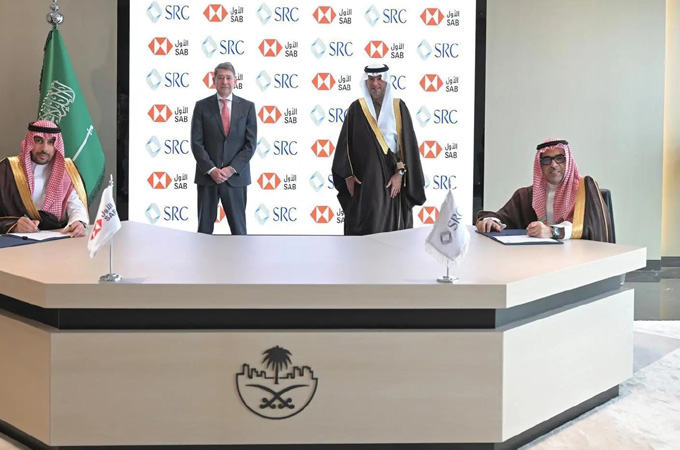
 Saudi Real Estate Refinance Company, a subsidiary of the Public Investment Fund, has signed an agreement with Alawwal Bank to acquire a portfolio of residential mortgages, extending its drive to deepen the kingdom’s housing finance market and bolster liquidity among lenders.
The transaction, confirmed by the entities involved, forms part of a broader strategy to expand long-term funding for homebuyers and strengthen the secondary mortgage market. While financial terms were not publicly disclosed, officials described the portfolio as comprising performing residential loans originated in line with domestic regulatory standards.
Saudi Real Estate Refinance Company, commonly known as SRC, was established in 2017 as a wholly owned unit of the Public Investment Fund to develop a robust refinancing ecosystem. By purchasing mortgage portfolios from commercial banks and providing them with long-term liquidity, SRC aims to enable lenders to issue fresh housing loans, support home ownership targets and promote financial stability.
The latest agreement with Alawwal Bank, which operates under the Saudi British Bank group following a merger completed in 2021, underscores the growing role of institutional refinancing in the kingdom’s housing sector. Executives involved in the deal said the transfer would allow Alawwal to free up capital and manage balance-sheet exposure, while maintaining customer servicing arrangements.
Saudi authorities have set ambitious targets to raise home ownership among citizens to 70 per cent by the end of the decade under Vision 2030. Mortgage lending has expanded rapidly over the past five years, driven by government-backed programmes, regulatory reforms and subsidised financing initiatives. Data from the Saudi Central Bank show that residential mortgage issuance has multiplied since 2018, with banks and specialised finance companies competing for market share.
Against that backdrop, SRC has steadily increased its portfolio acquisitions, issuing local-currency sukuk and engaging in structured transactions to fund purchases. Analysts say the model mirrors practices in more mature markets, where secondary mortgage entities provide liquidity and standardisation, although the scale in the kingdom remains comparatively modest.
Alawwal Bank’s participation reflects how large lenders are adjusting to evolving capital requirements and risk management considerations. By selling part of its mortgage book, the bank can redeploy funds into new lending segments or strengthen capital buffers, particularly as interest-rate conditions shift in line with global monetary policy trends.
Sector specialists note that while mortgage growth has moderated compared with the surge seen during the pandemic-era stimulus period, demand for housing finance remains underpinned by demographic factors and urban development projects. Government-backed entities, including the Real Estate Development Fund and housing initiatives under the Ministry of Municipal, Rural Affairs and Housing, continue to play a catalytic role.
SRC’s mandate extends beyond simple portfolio purchases. It has also worked to standardise documentation, improve underwriting criteria and facilitate the issuance of mortgage-backed securities. By creating a clearer pathway for refinancing, policymakers hope to attract long-term investors, including pension funds and insurance companies, into housing finance instruments.
Market observers say such transactions can help distribute risk across the financial system. Instead of individual banks retaining large concentrations of long-dated housing loans, portfolios can be aggregated and financed through capital markets. This diversification is viewed as important in an economy that remains exposed to oil price cycles, even as diversification efforts accelerate.
Public Investment Fund, one of the world’s largest sovereign wealth funds, has expanded its domestic investment activities alongside global acquisitions in technology, infrastructure and sports. Through subsidiaries such as SRC, it seeks to stimulate private-sector participation and create scalable financing channels that align with economic transformation plans.
Housing affordability remains a sensitive issue. Although government subsidies and mortgage guarantees have widened access, rising property prices in major cities have prompted debate over supply constraints and land development. Authorities have responded with programmes aimed at boosting residential construction and encouraging partnerships with private developers.
Financial analysts caution that maintaining prudent underwriting standards is essential as the mortgage market matures. Saudi Central Bank has issued guidelines on loan-to-value ratios and borrower eligibility to guard against excessive leverage. SRC’s role in purchasing portfolios is structured to comply with these regulatory safeguards, according to officials familiar with its framework.
The agreement with Alawwal is one among several concluded by SRC with domestic banks over the past few years. Each transaction adds to the company’s cumulative refinancing volume and reinforces its position as a central node in the housing finance ecosystem.
Topics
Saudi Arabia