
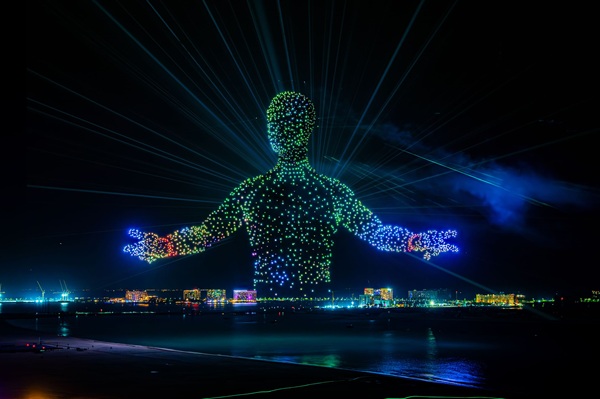
 Ras Al Khaimah ushered in 2026 with a choreographed New Year’s Eve production that combined drones, pyrotechnics and music to secure a Guinness World Records title, reinforcing the emirate’s ambition to position large-scale cultural spectacles as a pillar of its tourism strategy. Officials said the 15-minute performance culminated in the formation of a vast phoenix in the night sky, recognised as the largest aerial display of its kind created through a coordinated mix of drones and fireworks.
Crowds lined the coastline shortly before midnight as thousands of drones lifted off in precise formation, synchronised with ground-based fireworks launched from multiple sites along the waterfront. The phoenix, a symbol of renewal and resilience, emerged in stages, with wings spreading across the skyline before dissolving into cascading light effects that marked the arrival of the new year. Guinness World Records adjudicators present at the event verified the scale and complexity of the display, confirming the record shortly after the finale.
Organisers described the show as the most ambitious New Year’s Eve programme attempted by the emirate, building on a pattern of increasingly intricate celebrations over the past several years. The logistics involved months of planning, airspace coordination and safety testing, with drone operators, pyrotechnics engineers and creative directors working under strict regulatory oversight. Authorities said all necessary aviation and maritime controls were in place to ensure public safety, with restricted zones enforced during the performance.
Tourism officials framed the record as part of a broader effort to differentiate Ras Al Khaimah in a crowded regional events calendar. While neighbouring destinations have focused on headline-grabbing fireworks counts or celebrity concerts, the emirate has leaned into technology-driven spectacles that emphasise precision and narrative design. The phoenix theme was chosen to reflect both the turning of the calendar and Ras Al Khaimah’s longer-term economic transformation, according to people involved in the creative process.
Local hotels reported high occupancy rates across the New Year period, with many properties offering rooftop views or bundled packages tied to the celebration. Hospitality executives said demand was driven not only by domestic visitors but also by travellers from Europe, Asia and the wider Middle East seeking a quieter alternative to larger metropolitan celebrations without sacrificing spectacle. Transport authorities increased public services along the coast to manage post-midnight departures, reporting smooth flows despite the size of the crowd.
The use of drones alongside fireworks has become a defining feature of large public celebrations worldwide, reflecting tighter environmental and safety considerations as well as advances in software that allow for complex three-dimensional imagery. Industry specialists note that while fireworks remain central to mass celebrations, drones offer reusability and creative flexibility, enabling organisers to tell stories rather than rely solely on volume or brightness. Ras Al Khaimah’s record attempt was notable for blending the two rather than replacing one with the other, a technical challenge that requires exact timing to avoid interference.
Guinness World Records representatives said the title hinged on the size, clarity and duration of the phoenix formation, as well as the verified number of aerial elements involved. The adjudication process included independent measurements, data logs from the drone control systems and visual confirmation from multiple angles. Officials declined to disclose precise technical specifications immediately, citing standard verification protocols, but confirmed that the record surpassed previous benchmarks for aerial symbolic displays.
The celebration also carried economic implications beyond a single night. Tourism planners view such events as long-tail marketing tools, generating international media exposure and social media circulation that extend well into the year. Analysts say destinations that successfully anchor their brand to distinctive, repeatable spectacles are better placed to convert one-off visitors into return travellers, particularly when events are tied to broader cultural narratives rather than isolated stunts.
Topics
Spotlight