
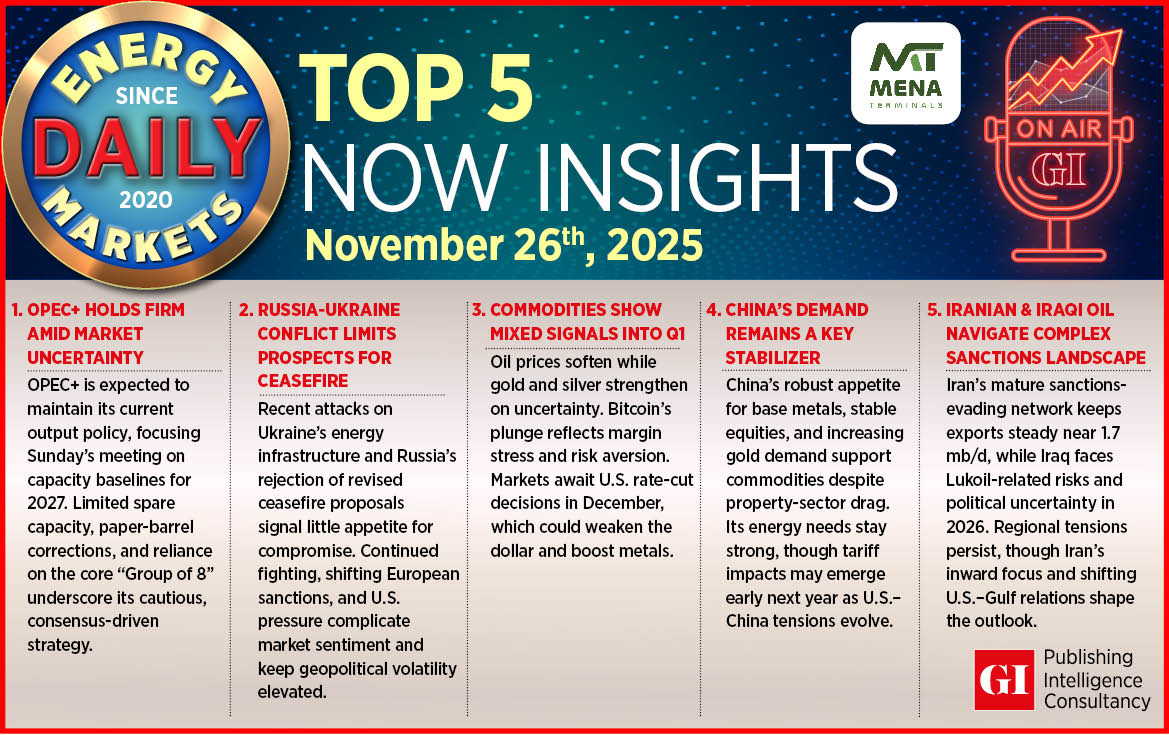
The decision emerged from a full OPEC+ ministerial meeting held this week, in which members reaffirmed the output quotas agreed previously for the whole of 2026. Ministers tasked the group’s secretariat to initiate a comprehensive evaluation of each member’s maximum sustainable crude production capacity. The resulting baseline figures will underpin quotas for 2027 and beyond.
Under the agreement, the MSC review will be conducted between January and September 2026 by a consultancy appointed by OPEC+ for most members; separate arrangements will apply for countries under sanctions such as Russia, Iran and Venezuela. For sanction-affected members, capacity may be gauged using alternative methods such as averaging recent output levels.
The move seeks to address long-standing friction within OPEC+ between high-capacity producers pushing for greater quotas and declining producers reluctant to accept deeper cuts. For example, nations such as the United Arab Emirates have expanded capacity in recent years and argued for higher baselines, while several African members have contended with declining output and resisted further reductions. The new mechanism is seen as a step toward delivering a more transparent and equitable quota framework.
Despite the capacity reassessment, OPEC+ opted against any immediate increase in output. The group has already added roughly 2.9 million barrels per day to global supply since April 2025 by gradually unwinding voluntary cuts. Nevertheless, the 3.24 million bpd of remaining output cuts—equivalent to around 3 percent of global demand—will remain intact until the end of 2026.
Officials described the capacity-based baseline system as necessary to preserve market stability amid uncertain demand and volatile prices. The decision coincides with broader concerns over possible oversupply as international developments, including negotiations over the Russia–Ukraine conflict and sanctions, continue to cast a shadow over future crude flows.
Market reaction was immediate: oil benchmarks saw a modest uptick in response to the clarity provided by the new framework and the commitment to steady supply. Analysts believe the move could foster greater predictability and discourage abrupt swings in output that have previously destabilised markets.
Topics
Live News