
The agreement allows cargoes to be delivered to any port across India, offering flexibility to support IndianOil’s expanding import infrastructure and the nation’s aim of boosting gas’s share in its energy mix. IndianOil’s total offtake will reach 2.2 mtpa by 2029, comprising 1 mtpa from Ruwais and 1.2 mtpa from ADNOC’s Das Island operations. ADNOC’s Senior Vice-President Marketing, Rashid Khalfan Al Mazrouei, described the accord as “underscoring the robust energy relations” between the UAE and India and aligning with ADNOC’s ambition to supply more lower-carbon gas globally.
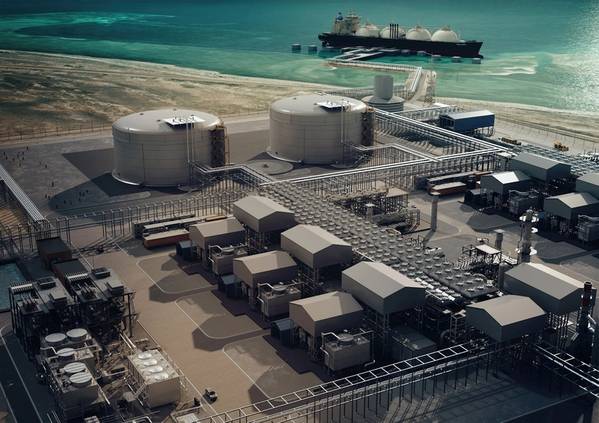
The Ruwais LNG project, located in Al Ruwais Industrial City in Abu Dhabi, is under construction and expected to commence commercial operations in 2028. The facility comprises two liquefaction trains with a combined capacity of 9.6 mtpa and represents one of the region’s first LNG export plants powered by clean electricity and designed with lower-carbon intensity in mind. More than 8 mtpa of capacity has already been committed to international customers under long-term deals.
Analysts view the deal as a strategic move for both parties. For ADNOC, locking in a long-term supply contract with a significant Indian energy buyer strengthens its Asian LNG presence at a time when competition from Qatar and Saudi Arabia for global market share is intensifying. For IndianOil, the agreement aids its aspiration to raise natural gas usage from under 10 per cent of the energy mix to 15 per cent by 2030.
However, the arrangement comes with challenges. IndianOil must expand import infrastructure, including regasification terminals and pipeline networks, to absorb increased LNG volumes. Infrastructure bottlenecks remain a key constraint in India’s energy transition path. On the supply side, the Ruwais project’s successful ramp-up remains critical; any construction delays or cost overruns could impact delivery timelines.
The contract also aligns closely with the 2022 Comprehensive Economic Partnership Agreement between the UAE and India, which set the ambition of increasing bilateral trade to $100 billion by 2030. Energy trade, particularly LNG, is a major growth vector under that framework.
Beyond the India deal, ADNOC has secured other long-term LNG supply agreements, including a 15-year deal with Japan’s Osaka Gas Co., Ltd. for up to 0.8 mtpa and a contract with Germany’s SEFE Securing Energy for Europe GmbH for 1 mtpa, both drawing on production from Ruwais. These contracts further anchor ADNOC’s strategy of building a global lower-carbon LNG export hub.
On the environmental front, Ruwais is significant for its green credentials: it will be powered by clean electricity and will use digital and artificial-intelligence-driven operations to enhance efficiency and reduce emissions, placing it among the lowest-carbon intensity LNG plants globally. These features cater to buyers with decarbonisation goals and help ADNOC advance its transition narrative.
The deal raises questions about pricing and market dynamics amid evolving LNG markets. While long-term contracts provide supply security, they also lock in conditions in a market facing increasing volatility and emerging competitor supply. If LNG prices soften or alternative low-cost supplies emerge, buyers may reassess contract structures. Meanwhile, sellers such as ADNOC must ensure competitiveness while meeting decarbonisation commitments.
For India’s energy sector, the contract is timely. With gas infrastructure lagging behind demand growth, this agreement offers a stable long-term supply stream and contributes to diversification away from coal and oil. But it also places emphasis on domestic investment in import facilities, pipeline connectivity and regulatory reform to fully exploit the opportunity.
Topics
Live News