
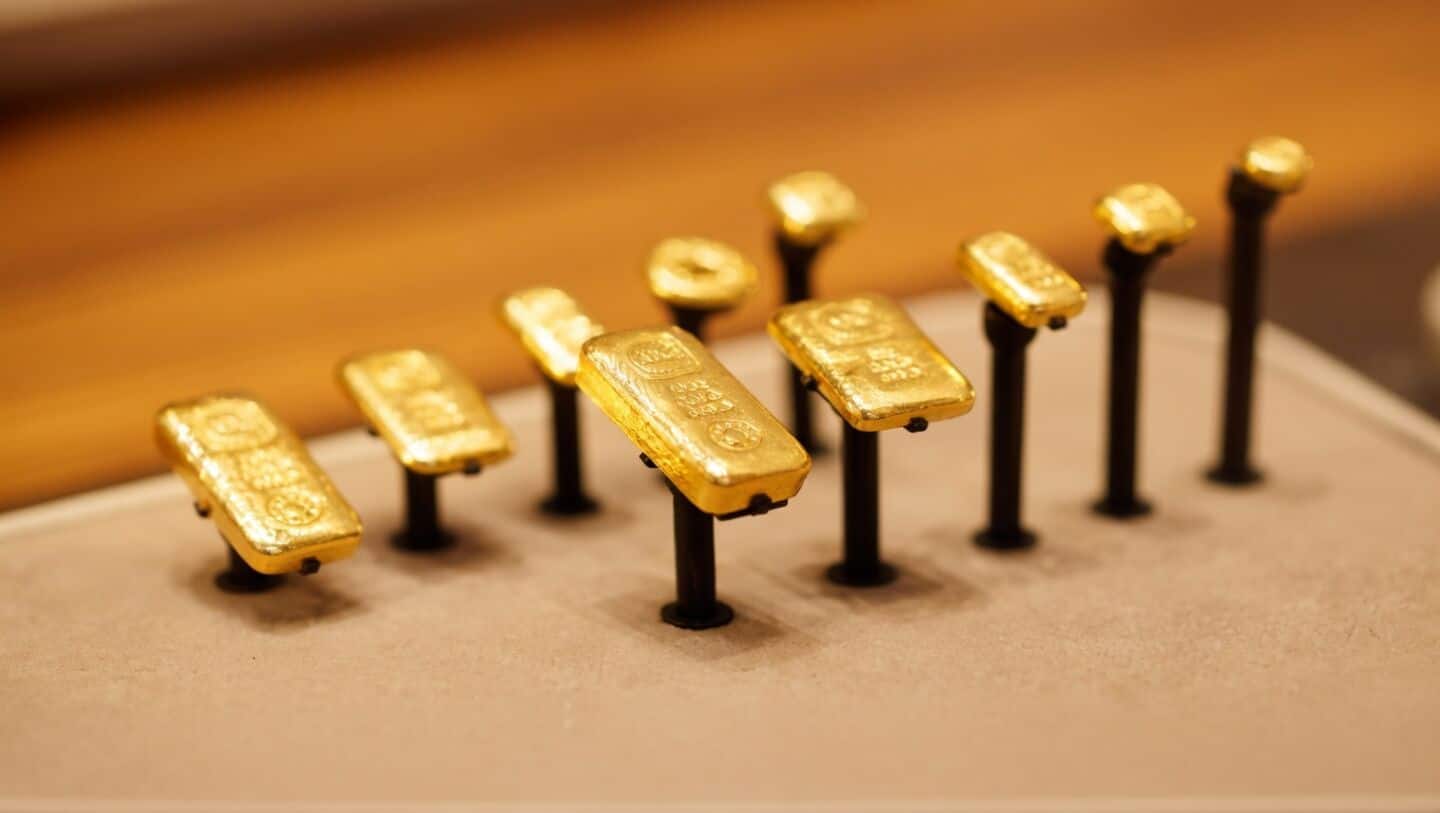
 Swiss private bank Union Bancaire Privée has moved back into gold after trimming a sizeable holding during the sharp sell-off linked to the Iran war, arguing that the longer-term case for bullion remains intact and that prices could still climb to $6,000 an ounce by the end of 2026. The renewed buying comes after one of the most volatile stretches for the metal in years, with gold losing more than a tenth from late-February levels before stabilising this month.
 The bank’s shift is notable because it captures the divided mood in precious-metals markets. Gold has traditionally benefited from war, inflation fears and geopolitical stress, yet this year those same forces have also strengthened the US dollar, lifted oil prices and pushed investors to reassess the prospect of interest-rate cuts. On Monday, spot gold traded near $4,730 an ounce after dropping to a near one-week low, while oil pushed above $100 a barrel as tensions around Iran and the Strait of Hormuz unsettled wider markets.
UBP’s wager is that the structural supports for gold are stronger than the shorter-term drag from higher rates and a firmer dollar. Bloomberg reported that the bank is buying again after the slump and still sees bullion ending the year at $6,000 an ounce, pointing to enduring official-sector demand and a broader long-run investment case. That stance is more bullish than the bank’s own published investment outlook from January, when it projected gold at around $5,200 by the fourth quarter of 2026, suggesting its internal conviction has strengthened despite the spring setback.
Part of that conviction rests on central banks, which have remained a powerful pillar of demand even after record prices in 2025. China’s central bank added gold for a seventeenth straight month in March, taking holdings to 74.38 million fine troy ounces. World Gold Council data show central banks bought a net 230 tonnes in the final quarter of 2025, while full-year global gold demand topped 5,000 tonnes for the first time, according to industry estimates cited by Reuters. Those figures matter because they suggest official institutions still see bullion as a reserve diversifier in a more fragmented geopolitical environment.
Another support is investor positioning. Reuters reported that precious-metals funds drew net inflows in the week to April 1 after suffering pressure through much of the war-driven sell-off. Although those inflows were modest, they hinted that some investors were returning once ceasefire hopes and a softer rate outlook briefly steadied markets. Gold has also shown an ability to rebound quickly when inflation worries ease and the dollar softens, underscoring that sentiment remains fragile rather than broken.
Still, the risks to UBP’s view are plain. Gold’s March decline was its steepest monthly fall since 2008, according to Reuters, reflecting how vulnerable the metal can be when investors anticipate tighter monetary policy for longer. Rising energy prices have complicated the outlook by feeding inflation expectations just as central banks were expected to turn more supportive. In that setting, bullion loses some appeal because it offers no yield, while the dollar can become the preferred haven.
UBP is not alone in expecting higher prices, even if its target sits near the top end of the range. Reuters reported in February that JPMorgan kept a 2026 year-end gold forecast of $6,300 an ounce, while Reuters also reported that UBS raised its targets as high as $6,200 for parts of 2026 before pencilling in a softer $5,900 by year-end. That spread highlights a broader industry belief that bullion can extend its secular rise, but also that the path is likely to be uneven and highly sensitive to geopolitics, rate expectations and reserve-management trends.
Topics
World