
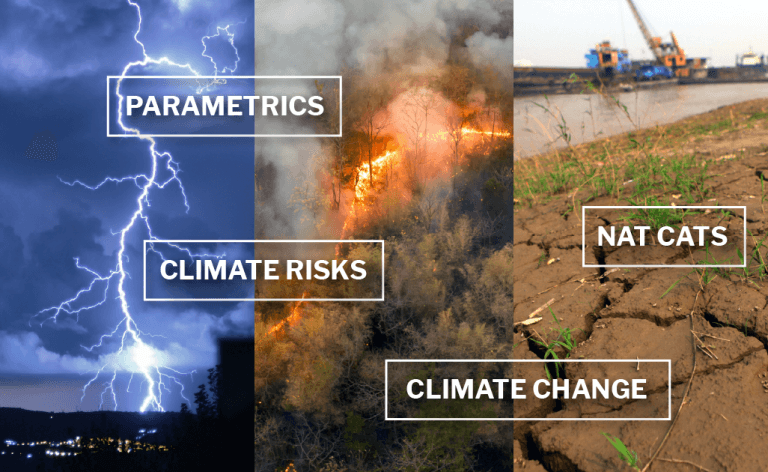
 America’s artificial intelligence infrastructure push is colliding with a widening severe-weather risk, with more than half of planned data centre projects concentrated in states exposed to tornadoes, hail and damaging winds.
Specialty insurer MS Amlin has found that 51 per cent of planned US data centre projects, representing about $670 billion in investment, are located in states at high risk from severe convective storms. The finding places a growing share of the country’s digital infrastructure pipeline inside regions where fast-forming weather systems can damage buildings, disrupt electricity supply and trigger prolonged construction or operational delays.
The analysis covers 670 planned data centres across the United States and points to a broader catastrophe exposure across the sector. About 56 per cent of the pipeline, representing nearly $800 billion in investment, sits in states highly exposed to severe convective storms, hurricanes, earthquakes or winter storms. The concentration reflects the speed at which developers are moving to secure large sites, grid connections and access to power for cloud computing and AI workloads.
Severe convective storms have become a central concern for insurers because they are frequent, geographically widespread and capable of producing large insured losses through hail, straight-line winds and tornadoes. For data centres, the risk is not limited to physical damage. Cooling systems, back-up power equipment, substations, fibre links and construction cranes can all become points of vulnerability. Even short disruptions can carry heavy financial consequences when facilities are designed to host high-density computing loads for enterprise clients.
The planned investment in storm-prone states is far larger than the current stock of assets in similar locations. Existing data centres in states with high severe-convective-storm exposure are valued at nearly $20 billion, suggesting that the prospective build-out could lift exposure by almost 40 times. That shift is sharpening scrutiny of how projects are designed, financed, insured and connected to local power networks.
Winter storms are another material threat. MS Amlin’s analysis indicates that 27 per cent of planned data centres, representing about $440 billion in investment, are located in states at high risk of winter-storm disruption. Such events can strain power grids, disrupt transport routes and complicate emergency repairs, particularly for facilities that depend on uninterrupted electricity and fuel supplies for generators.
Hurricane exposure is also significant, with 21 per cent of planned projects, worth about $340 billion, located in high-risk states. Earthquake exposure is smaller in project count, at 3 per cent of planned facilities, but still represents about $12 billion in investment. The figures show that climate and catastrophe risk is becoming a core part of the economics of digital infrastructure rather than a peripheral insurance issue.
The build-out is being driven by rapid growth in AI computing, cloud services and data storage demand. Technology groups, cloud providers and specialist developers are racing to expand capacity as generative AI models require large clusters of advanced chips, high-voltage power systems and specialised cooling. Hyperscale facilities can involve multibillion-dollar commitments, while large campuses increasingly resemble utility-scale industrial assets.
Insurance capacity is becoming a constraint. Global insurance premiums linked to data centres are expected to more than double to $24.2 billion by 2030 from about $10.6 billion, as construction values rise and risk accumulation becomes harder to diversify. A single large campus can carry construction costs above $20 billion, making full coverage difficult for insurers when projects sit in catastrophe-prone regions or share exposure to the same weather systems.
Power availability remains the decisive factor in site selection, but that priority can push developers towards locations with cheaper land, favourable permitting and access to transmission capacity, even when natural-hazard exposure is elevated. The share of data centres in US peak summer power demand is projected to rise from 4.1 per cent in 2025 to 5.3 per cent in 2026 and 8.5 per cent in 2027, increasing pressure on utilities and regulators to balance new loads with grid reliability.
Developers are responding with stronger building standards, enhanced roof and façade specifications, flood modelling, hardened substations, redundant fibre routes and more detailed business-interruption planning. Insurers are also pushing for better risk engineering at the construction stage, including site-specific catastrophe modelling, stronger contractor controls and clearer contingency plans for delayed equipment, damaged components and power outages.
Topics
Technology