
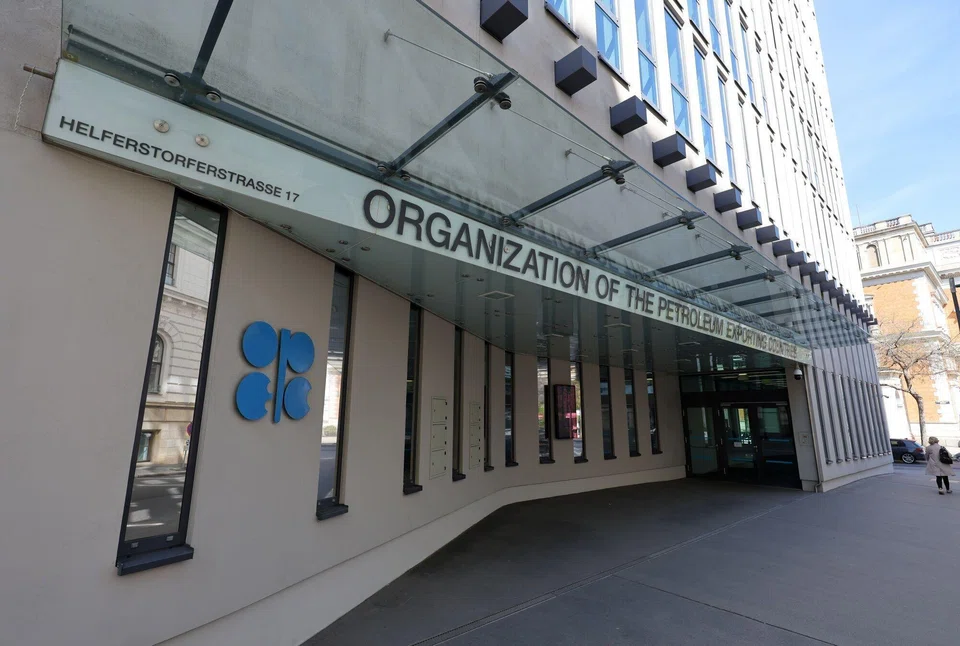
 United Arab Emirates has jolted the global oil order by announcing its withdrawal from OPEC and the wider OPEC+ alliance, ending nearly six decades inside the producers’ group and raising fresh doubts over the cartel’s ability to manage supply during one of the most volatile periods for energy markets in years.
The decision, effective from 1 May 2026, was announced in Abu Dhabi as a strategic shift tied to the country’s long-term energy policy and production ambitions. It leaves OPEC without one of its most influential Gulf members and gives the UAE freedom to pursue output plans that had repeatedly clashed with the quota system led by Saudi Arabia and other major producers.
Oil markets initially treated the move with caution because the immediate supply impact is constrained by the war involving Iran and severe disruption around the Strait of Hormuz, the critical shipping lane for Gulf crude. Brent crude has remained near elevated levels, reflecting war risk, shipping uncertainty and tight physical availability rather than the UAE announcement alone. The longer-term implications, however, are more significant: once transport constraints ease, Abu Dhabi could increase output beyond limits agreed within OPEC+, adding pressure to prices and testing the discipline of remaining members.
The UAE has invested heavily in raising crude production capacity, with targets that point towards about 5 million barrels per day. Its output under OPEC+ restrictions has been far lower, around the mid-3 million barrels-per-day range before the latest disruption to Gulf flows. That gap has long shaped Abu Dhabi’s frustration with the cartel’s system of baselines and quotas, especially as the country sought to monetise reserves while also presenting itself as a reliable supplier to Asia, Europe and the United States.
The withdrawal also exposes deeper strategic divergence between Abu Dhabi and Riyadh. Saudi Arabia has traditionally acted as the group’s swing producer, bearing the largest burden when production cuts were needed to support prices. The UAE, while often aligned with Saudi policy, has increasingly sought more room for independent energy, trade and diplomatic decisions. Competition over investment, logistics, finance and regional influence has added another layer to the relationship.
OPEC’s challenge is not only the loss of barrels. The greater risk is psychological. The group’s authority rests on members believing that collective restraint produces better outcomes than individual expansion. A high-capacity producer leaving the framework weakens that assumption and could encourage others to demand looser terms, higher baselines or exemptions. Smaller producers with limited ability to raise output may remain dependent on the cartel, but larger producers with spare capacity will be watching closely.
OPEC+ has survived internal strains before, including quota disputes, temporary price wars and disagreements over how quickly to unwind cuts. Russia’s role in the broader alliance added geopolitical complexity after 2016, while rising production from outside the group, especially from the United States, steadily reduced the cartel’s ability to dictate market direction. The UAE’s exit lands at a moment when those pressures are already acute.
For consumers, the eventual effect could be lower prices if additional UAE supply reaches the market after shipping routes normalise. For producers, it raises the risk of a more competitive phase in which market share becomes more important than price defence. That would mark a departure from the supply-management model that OPEC+ has relied on to cushion downturns and maintain revenue.
The move also carries diplomatic weight. The UAE has deepened ties with Washington, Beijing and other major energy consumers while investing in downstream, renewables, liquefied natural gas and artificial intelligence-linked infrastructure. Its energy policy is increasingly framed around flexibility rather than cartel discipline. Leaving OPEC gives Abu Dhabi more control over production decisions, export arrangements and long-term supply contracts.
Still, the immediate oil balance remains shaped by conflict, not cartel politics. Disruption around Hormuz has limited the ability of Gulf producers to move crude freely. Alternative export routes, including pipelines bypassing the strait, can ease pressure but cannot fully replace normal flows for the region’s major exporters. That means any UAE production increase is unlikely to flood the market at once.
Topics
Politics