
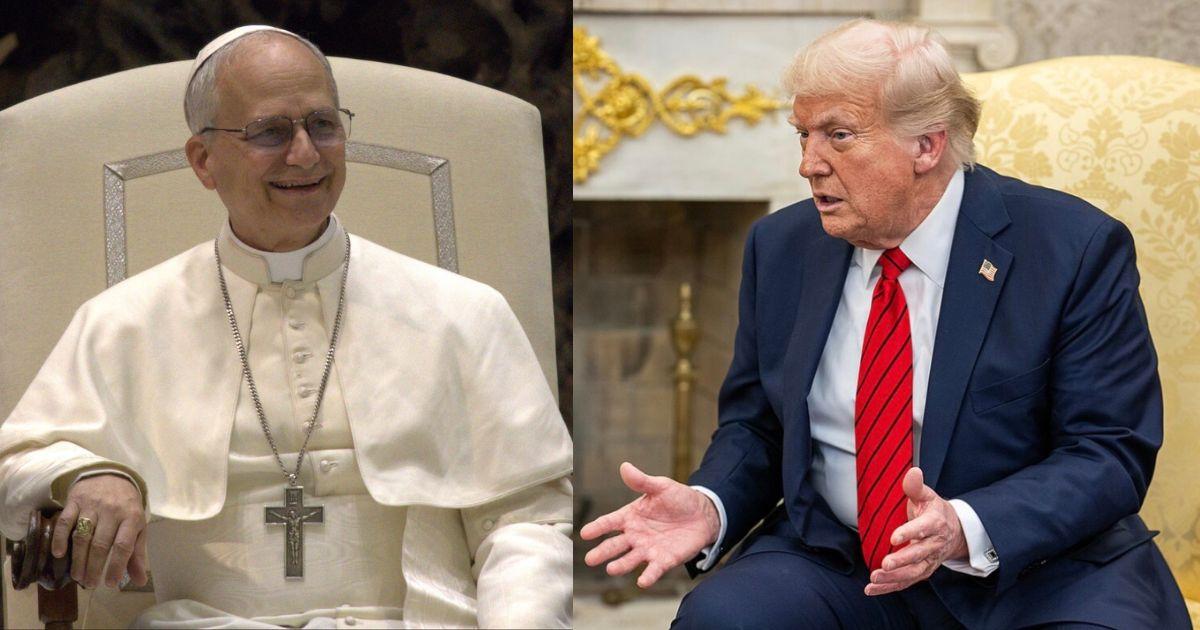
 Pope Leo XIV has said it is “not in my interest at all” to debate U. S. President Donald Trump, seeking to cool a public quarrel while making clear that he will keep preaching peace as war and political tension deepen across several regions. The pontiff made the remarks to reporters aboard the papal plane on April 18 while travelling from Cameroon to Angola during his Africa tour.
 Leo’s intervention came after several days of sharp exchanges that drew the Vatican, the White House and parts of the U. S. political and religious establishment into an uncomfortable contest over war, morality and public language. The Pope said media coverage had wrongly framed his earlier comments as though he were trying to reopen a personal argument with Trump. He insisted that his message was rooted in the Gospel and the church’s duty to speak about peace, not in any desire for a political contest with the American president.
The dispute appears to have been fuelled by Leo’s criticism of leaders who justify violence with religious language and by his denunciation of a world “ravaged by a handful of tyrants” during an appearance in Bamenda, in Cameroon’s conflict-hit English-speaking region. Reuters reported that the Pope’s speech condemned rulers who spend vast sums on war while ordinary people face deprivation, and also criticised the plunder of Africa’s resources. Leo later said those remarks had been drafted weeks earlier and were not aimed specifically at Trump.
Trump had responded days earlier with a scathing Truth Social post calling Leo “weak on crime” and “terrible for foreign policy”. Reuters also reported that Trump later posted an AI-generated image portraying himself in a Jesus-like form, a move that drew backlash before the image was taken down. That sequence turned what might have remained a disagreement over rhetoric into a broader spectacle touching on faith, power and political branding in the digital age.
Leo’s refusal to engage further suggests a deliberate Vatican effort to deny Trump the sustained confrontation that modern politics often rewards. At the same time, the Pope did not retreat from substance. He said he had no fear of the Trump administration and would continue to speak loudly about the Gospel’s message of peace. That distinction matters. It allows the pontiff to separate moral teaching from partisan combat, even as his words inevitably carry political weight when they touch on war, migration and the conduct of leaders.
The setting of the remarks was also important. Leo was not speaking from Rome in a carefully staged Vatican address, but during a demanding Africa trip that has taken him across Algeria, Cameroon, Angola and Equatorial Guinea in an effort to focus attention on a continent where more than a fifth of the world’s Catholics live. Reuters described the journey as ambitious in scale, covering nearly 18,000 kilometres across multiple flights. The Pope has used it to address armed conflict, poverty, corruption and the extraction of African wealth, themes that sit far beyond the Trump row but also explain why he is resisting efforts to reduce his message to a bilateral feud.
His stop in Angola underlined that broader mission. On April 19, Leo urged Angolans to overcome divisions left by the country’s long civil war, calling for unity, reconciliation and leadership that serves the public rather than entrenched interests. Reports from Reuters and AP said he also condemned corruption and the misuse of natural wealth while addressing one of the largest crowds of his tour. Those appearances reinforced the image of a pope trying to project pastoral authority on peace and justice, rather than one drawn into a transatlantic slanging match.
Politically, the exchange still carries consequences. Trump remains a dominant figure in U. S. public life, and any clash with an American-born pope is bound to resonate deeply among Catholics and other Christian voters. Vice President JD Vance signalled a softer tone after Leo’s latest remarks, thanking the pontiff for easing tensions. That suggests at least some within the administration see little advantage in extending the quarrel. For the Vatican, the calculation is different but equally clear: preserve moral independence, avoid becoming a prop in another political cycle, and keep the focus on war, human suffering and the church’s own global witness.
Topics
World