
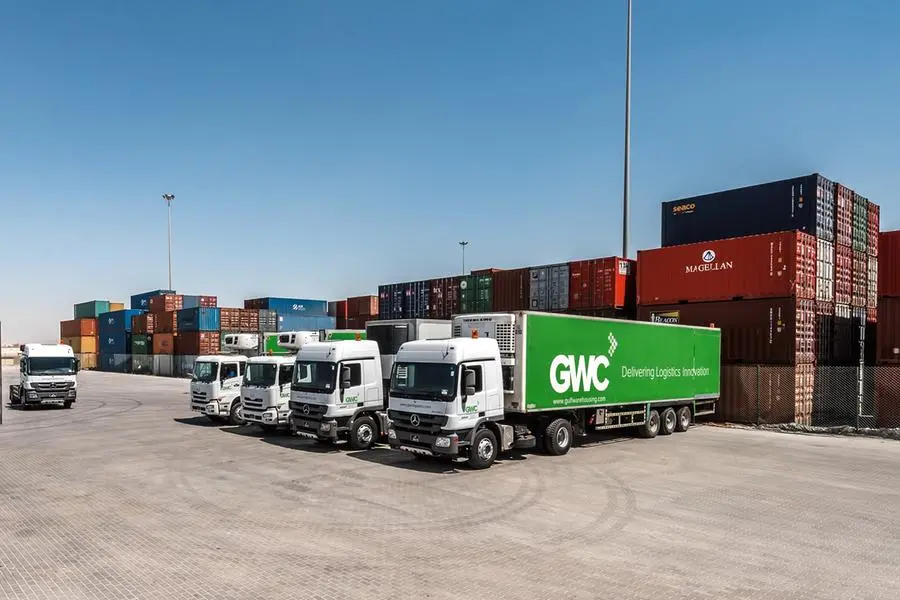
 Gulf Warehousing Company closed the first quarter of 2026 with net profit of QAR 33.78 million, as the Qatar logistics group said it met its operating plan despite a sharp bout of regional disruption in March that tested freight corridors across sea, air and land. Earnings per share stood at QAR 0.058, down from QAR 0.064 a year earlier, while gross revenue reached QAR 318 million.
 The figures point to a softer start than the same period last year, with profit down 10.3 per cent from QAR 37.7 million in the first quarter of 2025. Even so, the company framed the quarter as an operational success rather than a financial setback, arguing that January and February ran ahead of plan before transport conditions deteriorated across the Gulf in March. That distinction matters for investors assessing whether the quarter reflects weakening demand or a business absorbing a short, external shock while preserving continuity for customers.
GWC’s chairman, Sheikh Mohammed Bin Hamad Bin Jassim Bin Jaber Al Thani, used the results to underline the group’s role in crisis response, saying the company’s actions in March showed it remained “present, reliable and responsible” when supply chains came under strain. Managing director Sheikh Abdulla Bin Fahad Bin Jassim Bin Jaber Al Thani said the company worked with the Qatar Government to open new sea, land and air links to protect strategic food supplies and support domestic supply chains. Chief executive Matthew Kearns said the group mobilised its GCC network in real time and ended the quarter with its workforce safe and customer commitments maintained.
At the centre of the quarter was an emergency logistics response triggered by geopolitical turbulence. GWC said vessel traffic through the Strait of Hormuz fell 86 per cent in March and that no large carriers called at Hamad Port during that period. It also said Qatar’s airspace suspension from February 28 to March 4 removed more than 3,000 tonnes of daily air freight capacity, while offshore oil and gas projects were halted. Those conditions forced logistics operators to improvise at speed, especially in food and essential goods, where delays can have an immediate commercial and social cost.
GWC’s answer was to build three corridors at once. The first was a sea route into the Gulf, backed by dedicated vessel capacity and onward distribution through warehousing assets in Oman and Jeddah to Qatar, the UAE, Bahrain and Saudi Arabia. The second was an air-land route via Riyadh, linking inbound air freight to bonded cross-border trucking into Qatar. The third was a TIR-powered air-to-land corridor at Hamad International Airport, which the company said was used for the first time to turn Doha into a redistribution point for cargo moving across all five GCC markets.
That response also sheds light on how the Gulf logistics industry is changing. Operators are no longer judged only on warehouse footprint or freight volume, but on how quickly they can reroute inventory, combine transport modes and use regional networks when chokepoints emerge. GWC said its business moves more than 2 million tonnes of freight a year, supported by over 1,600 specialised vehicles, 20 strategic locations across the GCC, ocean freight capacity of up to 60,000 TEUs annually and air freight capacity of up to 14,000 tonnes. The scale of that network helps explain why corridor flexibility has become central to the group’s pitch to both state-linked and commercial customers.
The quarter also showed that GWC is trying to turn disruption management into a longer-term regional growth strategy. The company said its Jeddah facility is already supporting group operations and that it is advancing near-term leasing plans in Riyadh and Dammam while studying broader expansion in Saudi Arabia in line with customer demand. It added that its international divisions have more than doubled their contribution to group net revenues over the past two years. That points to a business seeking to reduce reliance on a single domestic market and deepen its role in cross-border supply-chain design.
Operational indicators remained firm. GWC reported a 95 per cent client retention rate and average occupancy of 90 per cent across its three logistics parks in the first quarter, suggesting that margin pressure did not spill into a loss of customer confidence. For a sector where contracts are often sticky but highly competitive, those numbers indicate that customers continued to value reliability even as external conditions worsened. The market will still watch whether the lower profit base persists into the second quarter, especially if regional trade routes remain vulnerable to further shocks.
Topics
Qatar