
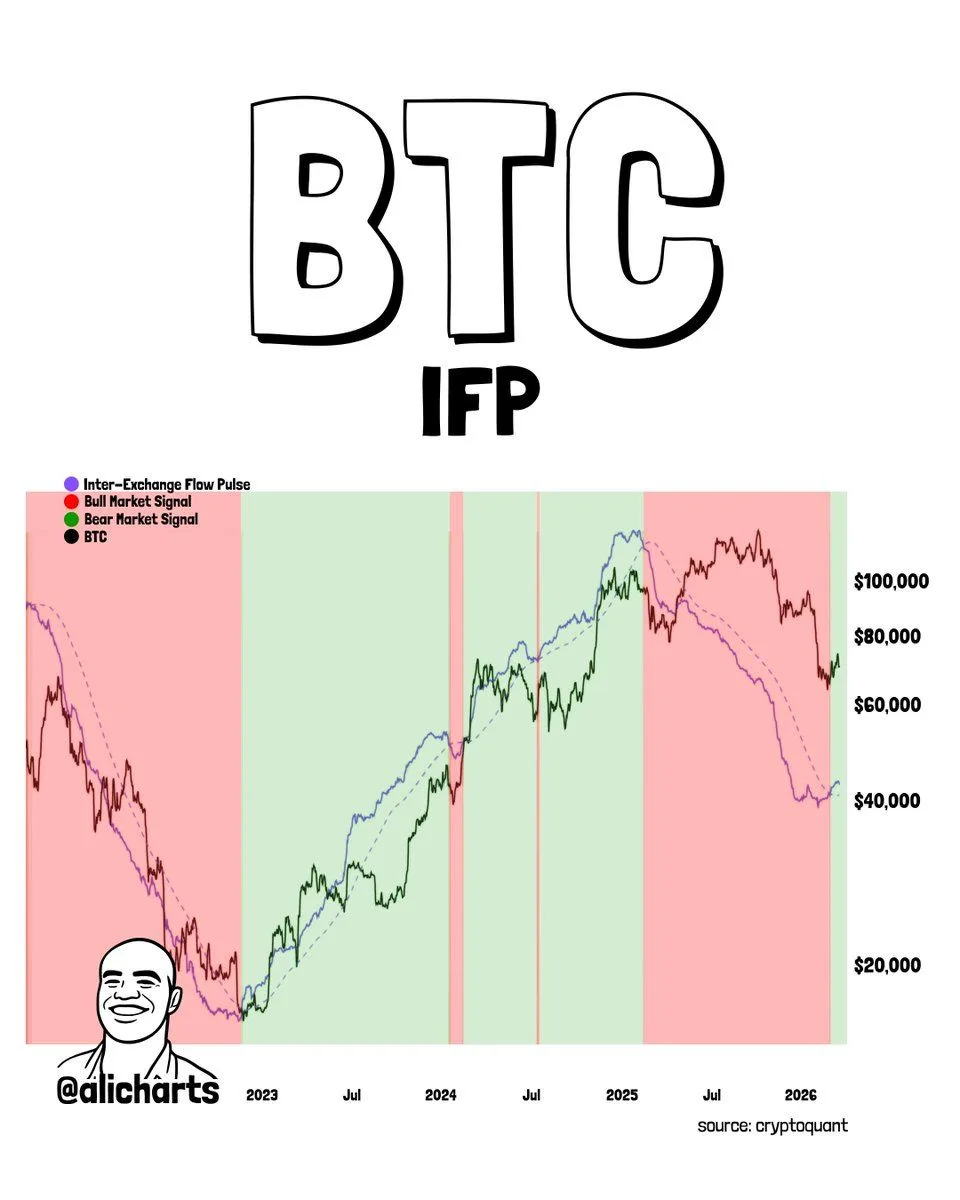
 Bitcoin’s market recovery gathered strength this week after a closely watched bull score index climbed to its highest reading since October 2025, adding to evidence that sentiment and on-chain conditions have improved after a bruising first quarter. The index rose to 40 on April 15, a level that still sits in neutral territory but marks a sharp rebound from the deeply weak readings seen in early March.
 The move matters because the bull score index is designed to capture Bitcoin’s broader market health by combining technical and fundamental signals into a single reading. CryptoQuant analyst Arab Chain said the rise to 40 points reflects improving conditions and the beginning of a recovery in Bitcoin’s performance, though the measure would need to move above 60 to indicate what analysts describe as strong bullish conditions.
Price action has mirrored that shift. Bitcoin was trading at about $77,165 on April 18, with an intraday high of $78,242, after pushing above $76,000 during the week as investors rotated back into risk assets. That rally followed a stretch in which traders grew more confident that geopolitical stress in the Middle East might ease, helping both equities and crypto recover from the volatility that had weighed on markets earlier in the month.
Behind the change in tone is a rapid turn in several on-chain signals. Market reports tied to the index said a cluster of metrics that had been flashing caution switched direction within roughly 72 hours, helping lift the composite reading. Among the changes cited were weaker exchange inflows, a more negative exchange netflow reading that can imply reduced immediate selling pressure, and signs of accumulation by larger holders. Together, those shifts have fed the argument that Bitcoin’s rebound is not being driven by price alone but by a steadier improvement in network and holder behaviour.
That does not mean the market has fully regained the conviction seen at the peak of the last run-up. The same data points show how far sentiment had deteriorated beforehand. Reports tracking the bull score index said the measure had fallen from around 80 in October 2025 to as low as 10 in early March 2026, underlining the depth of the retreat after Bitcoin’s post-peak slide. Analysts have since pointed to a developing pattern of higher highs and higher lows from the March 29 floor as one sign that the market structure is becoming less fragile.
Another support for the rebound has come from institutional flows, though that picture remains uneven. TradingView’s syndication of Cointelegraph market reporting said demand for spot Bitcoin exchange-traded funds has remained intermittent, with inflows and outflows alternating every few days. It cited net inflows of $451 million on one trading day this week as a positive signal, but analysts cautioned that steadier buying would be needed to sustain a stronger move higher. That uncertainty helps explain why some traders still see the current advance as a recovery phase rather than the start of an unbroken surge.
The broader backdrop is also more complicated than a single indicator might suggest. Bitcoin’s climb above $76,000 has coincided with a relief rally across risk assets, but traders remain highly sensitive to headlines. Market coverage over the past two days has shown that geopolitical developments, expectations around cross-border trade flows and shifts in macro risk appetite are still influencing short-term crypto direction. In practical terms, that leaves Bitcoin exposed to abrupt reversals even as the underlying on-chain picture improves.
Topics
Cryptocurrency