
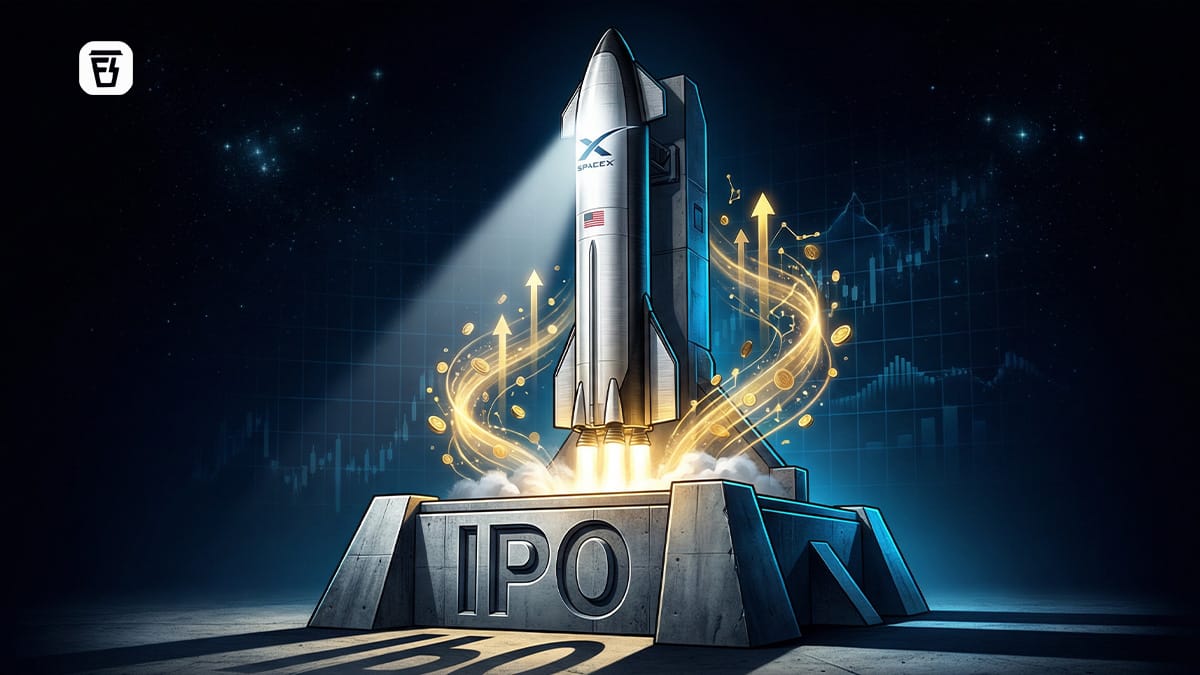
 Expectations surrounding a potential stock market debut for Elon Musk’s SpaceX have intensified after analysts argued that a valuation approaching $1.75 trillion could be justified, reflecting the company’s dominant position in commercial space launches and the expanding global demand for satellite-based communications.
A senior analyst at investment research firm PitchBook has said that a $1.75 trillion valuation in a future initial public offering could be defensible if investors adopt a longer investment horizon and accept the volatility associated with Musk’s technology ventures. The assessment comes as the Texas-based aerospace company weighs a confidential IPO filing that could emerge during 2026, potentially becoming one of the largest public offerings in corporate history.
The proposed valuation far exceeds the company’s already towering private market estimates. Internal share transactions and secondary sales have placed SpaceX’s valuation around $800 billion to more than $1 trillion in recent periods, making it the world’s most valuable private aerospace enterprise.
Analysts supporting the higher valuation point to the company’s unusual combination of businesses. SpaceX is not only the most active launch provider globally but also the operator of Starlink, a rapidly expanding satellite broadband network that has become the group’s largest revenue generator. The satellite division accounts for a substantial share of the company’s income and has created a recurring revenue model rarely seen in the traditionally cyclical space industry.
Financial figures illustrate the scale of the transformation. SpaceX generated roughly $15 billion to $16 billion in revenue during the past year, with profits estimated at about $8 billion, according to industry assessments. Much of that income derives from Starlink subscriptions, which have grown rapidly as the network deploys thousands of satellites in low-Earth orbit.
Proponents of a trillion-dollar valuation argue that investors are increasingly viewing the company as a technology platform rather than a traditional aerospace contractor. Starlink’s ability to deliver global broadband connectivity has opened new commercial markets ranging from consumer internet access to maritime and aviation services. Musk has also promoted plans for direct-to-mobile connectivity that would allow standard smartphones to connect directly to satellites without specialised hardware.
Under the PitchBook framework, investors willing to project growth several years ahead could view the valuation as reasonable when measured against expected revenue expansion. Estimates suggest that SpaceX’s annual revenue could rise to about $150 billion by 2040, representing a dramatic increase from current levels. If such projections materialise, the valuation multiple would fall significantly as revenues grow.
The possibility of raising as much as $50 billion in a listing would also provide the company with a substantial capital reserve for its most ambitious programmes. Funding could accelerate development of the Starship heavy-lift rocket, which Musk views as the backbone of future missions to the Moon and Mars. The same capital could expand the Starlink constellation and support experimental projects including orbital data centres powered by solar energy.
Supporters say these long-term ambitions explain why traditional valuation metrics struggle to capture SpaceX’s potential. The company combines satellite infrastructure, launch services, telecommunications and emerging artificial-intelligence applications, creating what analysts describe as a unique industrial platform. No publicly traded company currently mirrors that combination of capabilities.
Yet the prospect of a $1.75 trillion valuation has also triggered debate among investors and economists. Critics warn that such a figure would require exceptionally strong growth to justify the price tag, particularly given the capital intensity of the space industry. Launch vehicles, satellite manufacturing and ground infrastructure demand billions of dollars in ongoing investment.
Competition is also intensifying. Several governments and technology groups are attempting to build alternative satellite constellations. Amazon is advancing its Project Kuiper broadband network, while European initiatives backed by France, Germany and Italy are exploring independent satellite systems designed to reduce reliance on foreign providers. These projects aim to challenge Starlink’s early lead in the market.
Regulatory hurdles present another potential constraint. Environmental reviews and licensing processes for rocket launches have become increasingly complex as flight frequency rises. Analysts note that regulatory delays could slow development timelines, particularly for experimental vehicles such as Starship.
Market volatility tied to Musk himself is another factor investors are expected to consider. The entrepreneur’s high-profile leadership across several companies — including Tesla, social media platform X and artificial intelligence firm xAI — has historically amplified swings in investor sentiment. Analysts have cautioned that a SpaceX stock could experience large price movements following any operational delays or major announcements.
Even with these uncertainties, the aerospace company’s technological achievements continue to reshape expectations for the space economy. Its reusable Falcon 9 rockets have dramatically reduced launch costs and enabled a surge in satellite deployment. The Starlink network now numbers thousands of satellites and continues expanding coverage across remote regions, maritime routes and conflict zones where conventional telecommunications are unreliable.
Financial markets are watching closely as preparations for a possible listing progress. A successful IPO at the levels discussed would eclipse most technology offerings in scale and potentially rival the largest public market debuts on record.
Topics
Technology