
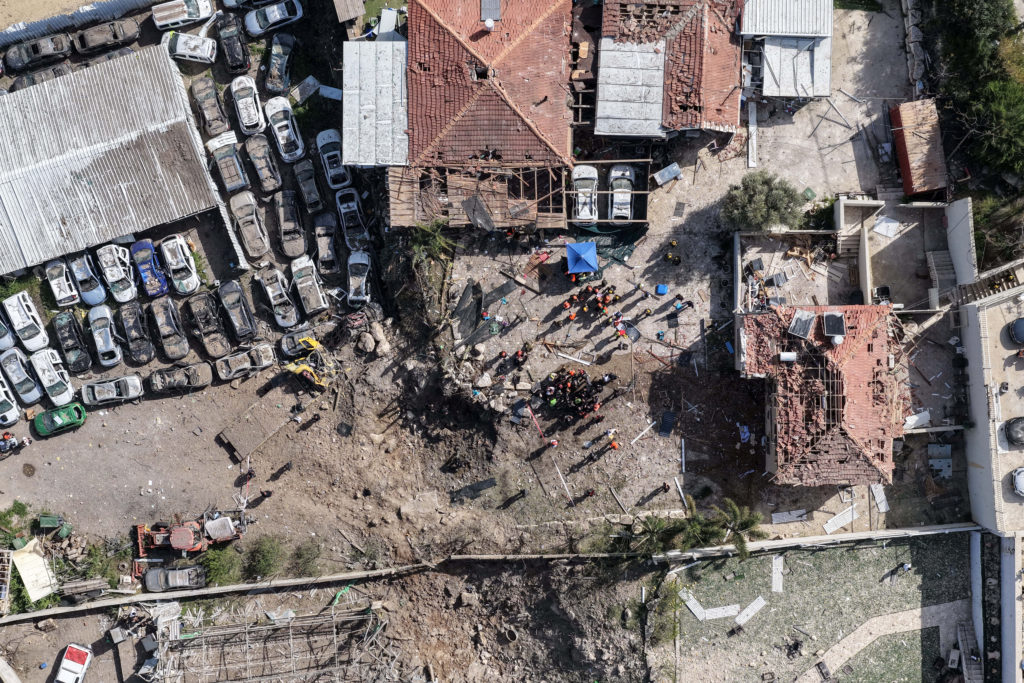
 Kuwait has stepped up protection around critical infrastructure after its armed forces said they intercepted 13 hostile drones in 24 hours, while a separate strike hit a power generation and water distillation facility, killing one worker and damaging a service building. The episode marks another sharp escalation for a Gulf state that had already faced attacks on airport infrastructure and other sensitive sites over the past week.
 Authorities said the drones were detected and dealt with as part of ongoing air defence operations, with the military remaining on high alert. Kuwait’s defence establishment signalled that forces were continuing their duties with vigilance as pressure mounted on the country’s civil and strategic assets. The attack on the electricity and desalination installation has raised particular concern because such facilities sit at the centre of daily life in Kuwait, where power supply and desalinated water are essential to households, industry and public services.
The death at the plant underscored the human cost of the strikes. Reuters reported that a worker from India was killed when a drone hit a service building at the facility, citing Kuwait’s Ministry of Electricity and Water. Official accounts described serious material damage to the building as emergency and security agencies assessed the site. The combination of loss of life and damage to utility infrastructure has pushed the story beyond a routine air-defence bulletin and into a wider debate about the vulnerability of Gulf infrastructure during regional conflict.
The latest incident did not occur in isolation. On March 24, a drone strike hit a fuel tank at Kuwait International Airport, causing a fire but no casualties after emergency procedures were activated and firefighters contained the blaze. Four days later, on March 28, multiple drone attacks were reported to have caused significant damage to the airport’s radar system, again without casualties. Taken together with the strike on the power and desalination facility, the pattern points to repeated attempts to test or disrupt systems linked to transport, fuel handling, electricity generation and water production.
That sequence is likely to deepen official concern about how broadly critical infrastructure is being targeted. Airports, fuel storage, power stations and desalination plants are not only economic assets in Kuwait; they are also pillars of national resilience in a desert state heavily dependent on imported food chains, uninterrupted logistics and energy-intensive water production. Any sustained campaign against them would force higher security spending, stricter emergency planning and closer coordination between defence agencies and civilian operators.
The attacks also reflect a wider regional environment in which drones have become a preferred instrument for harassment, signalling and disruption. They are comparatively cheap, can be launched in waves and are difficult to defend against completely, especially when aimed at fixed infrastructure. Gulf states have spent heavily on missile defence, radar and surveillance systems, yet the events in Kuwait suggest that even sophisticated networks can be strained when threats are dispersed across multiple sectors and repeated over several days.
For Kuwait, the strategic challenge is as much economic as military. Damage to airport systems can interrupt passenger traffic and cargo operations; strikes on fuel tanks threaten aviation continuity; and attacks on power and water facilities touch the most politically sensitive part of the domestic economy. Even when casualties are limited, the broader effect can be to unsettle the public, pressure utility managers and remind investors that regional tensions can reach well beyond traditional battlefields.
Kuwait’s response so far has emphasised operational readiness rather than political theatrics. Official messaging has focused on interception numbers, damage assessments and force preparedness, suggesting a deliberate attempt to project control at a moment of regional volatility. That approach may help steady domestic confidence, but it also highlights the narrow margin Gulf governments face when trying to reassure citizens while confronting an evolving drone threat that can strike both symbolic and essential targets.
Topics
Kuwait