
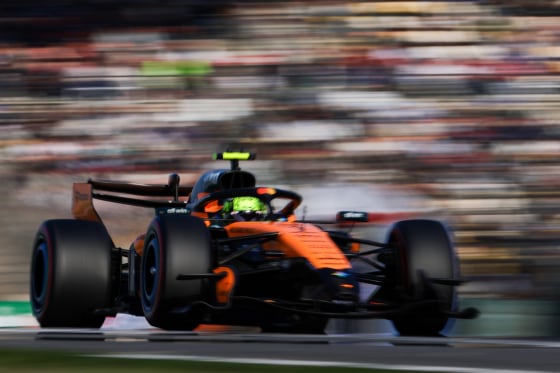
 Formula One has cancelled the Bahrain and Saudi Arabian Grands Prix scheduled for April, citing escalating security concerns linked to tensions across the Middle East and the wider regional conflict that has intensified in recent weeks.
The sport’s governing bodies confirmed early Sunday that the races planned for Bahrain on 12 April and for Saudi Arabia in Jeddah on 19 April would not take place, a move taken jointly by Formula One Management, the Fédération Internationale de l’Automobile, and local promoters. Officials said the decision was driven primarily by safety considerations affecting drivers, teams, staff, broadcasters, and spectators.
Stefano Domenicali, the chief executive of Formula One, described the cancellation as a difficult but necessary step amid mounting uncertainty in the region. “The safety of everyone involved in our sport is always the priority,” he said, noting that the championship would return to both venues once conditions allow.
The announcement alters the 2026 championship calendar, reducing the number of races from a planned 24 rounds to 22. The cancellations also create a gap of several weeks in the schedule between the Japanese Grand Prix at Suzuka, held at the end of March, and the Miami Grand Prix set for early May.
Regional instability has escalated after military strikes involving the United States, Israel and Iran, followed by retaliatory attacks affecting several locations across the Gulf. Security officials and motorsport organisers concluded that the risks associated with staging large international sporting events had grown too significant to ignore. Concerns also extended to travel logistics, cargo movements, and potential disruptions to airports and shipping routes used by teams transporting cars and equipment.
Formula One’s global operations depend heavily on complex freight planning, with equipment shipped weeks ahead of each race. The uncertainty surrounding airspace closures and transportation routes added to the pressure to take an early decision, as teams faced looming deadlines to send containers to the region.
The Bahrain Grand Prix has traditionally been one of the earliest races in the season and serves as a major showcase for motorsport in the Gulf. Bahrain International Circuit has hosted Formula One events since 2004 and regularly stages pre-season testing. Saudi Arabia joined the championship calendar in 2021 with the high-speed night race on the Jeddah Corniche Circuit.
Both governments have invested heavily in Formula One as part of broader strategies to promote tourism and economic diversification. Bahrain’s sovereign wealth fund Mumtalakat and Saudi energy giant Aramco maintain significant commercial ties with the sport, reflecting the growing role of the Gulf region in global motorsport sponsorship and infrastructure development.
Promoters in Bahrain and Saudi Arabia indicated their support for the decision, emphasising that safety considerations must take precedence over commercial interests. Officials in both countries expressed hope that the races would return to the calendar once the geopolitical situation stabilises.
The cancellation echoes earlier disruptions to the Formula One schedule caused by political or security crises. Bahrain’s race was previously called off in 2011 during civil unrest, while other events have been removed from the calendar over the years due to armed conflicts, natural disasters, or global health emergencies.
Support series that normally accompany Formula One events, including Formula 2, Formula 3 and the F1 Academy championship, have also been affected. Their scheduled rounds in Bahrain and Jeddah will not take place, disrupting development opportunities for young drivers and teams that rely on the international platform of Formula One weekends.
The revised calendar will now proceed with races in China and Japan before the unexpected pause in April. Teams have acknowledged that the gap could have mixed implications. Some competitors may use the additional time to accelerate car upgrades or refine technical strategies after the opening races, while others worry about the interruption to the rhythm of the championship.
Financial implications for the sport are also substantial. Hosting fees paid by race promoters form a significant portion of Formula One’s revenue, often reaching tens of millions of dollars for each event. The absence of two Middle Eastern rounds is expected to affect income linked to race promotion, broadcast rights, and hospitality programmes.
Despite the disruption, Formula One officials have indicated that the championship will continue without adding replacement races for April. Earlier discussions within the paddock considered potential alternatives such as European circuits capable of hosting events on short notice, but organisers concluded that inserting additional rounds would be impractical under the circumstances.
Topics
Live News