
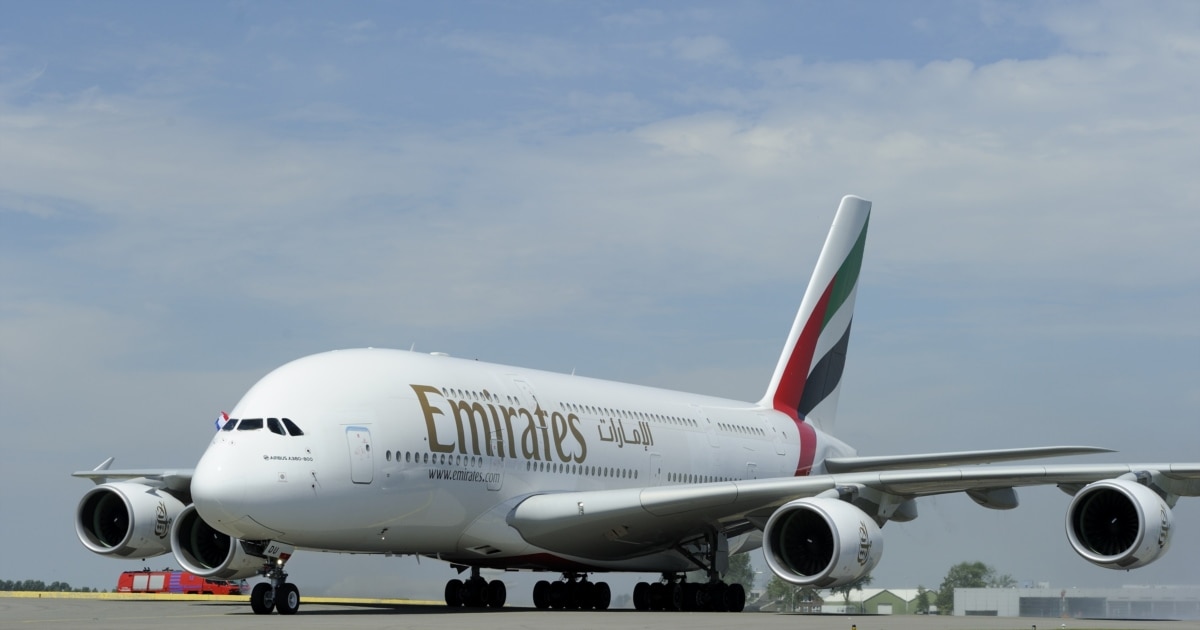
 Emirates’ flagship Airbus A380 aircraft have been left dispersed across multiple continents as prolonged airspace closures in parts of the Middle East disrupt normal long-haul operations, forcing the Dubai-based carrier to juggle schedules, crews and aircraft positioning on an unprecedented scale.
Dozens of the double-deck superjumbos, normally concentrated at Dubai International Airport, are now parked or operating from cities spanning Europe, Asia, Africa and North America. Industry data shows that while some aircraft remain active on high-demand routes, others are grounded at diversion airports after being unable to return to the Gulf hub amid flight restrictions linked to escalating regional security tensions.
Emirates, the world’s largest operator of the Airbus A380, has built its global network around the aircraft’s high-capacity model, funnelling passengers through Dubai to destinations across six continents. The sudden curtailment of air corridors over parts of the Gulf and neighbouring airspace has disrupted that hub-and-spoke strategy, complicating aircraft rotations and reducing scheduling flexibility.
Aviation analysts say the scale of the challenge reflects both the size of Emirates’ A380 fleet and the aircraft’s unique operational footprint. With more than 100 A380s in service, the carrier accounts for roughly half of the global fleet. Each jet typically carries between 489 and 615 passengers in Emirates’ configuration, making rerouting or substituting capacity logistically complex.
Flight tracking data over the past week shows several A380s operating truncated sectors or remaining stationed at outstations such as London, Sydney and New York after services were suspended or diverted. Some aircraft that had been en route to Dubai were redirected to alternate airports when regional airspace restrictions tightened with little notice.
Operational disruption has extended beyond aircraft positioning. Crew rostering has been strained as flight duty time limits and visa requirements restrict how long pilots and cabin staff can remain overseas. Emirates has been coordinating with foreign authorities and airport operators to secure parking slots, ground handling and maintenance support for aircraft that were not scheduled to remain outside Dubai for extended periods.
Airlines across the Gulf have faced similar constraints, but the impact on Emirates has been amplified by its reliance on the A380 for trunk routes. Smaller aircraft such as the Boeing 777 can be redeployed with greater flexibility, yet they cannot always replace the capacity of a superjumbo without adding additional frequencies.
Airspace closures have also forced airlines to adopt longer routings, adding flying time and fuel burn. For the A380, which consumes significant fuel relative to twin-engine alternatives, extended detours can erode operating economics. Aviation fuel prices remain elevated compared with pre-pandemic averages, increasing cost pressures at a time when carriers are striving to maintain profitability.
Dubai International Airport, one of the world’s busiest for international traffic, functions as the central artery of Emirates’ network. Any sustained constraint on access to that hub reverberates across its entire schedule. Airport authorities have been coordinating closely with the airline to manage reduced movements and prioritise essential services.
Industry observers note that the situation underscores the vulnerability of global aviation to geopolitical shocks. While airlines routinely adjust to weather events or isolated conflicts, the concentration of long-haul traffic through Gulf hubs means that broader regional instability can have disproportionate effects on intercontinental connectivity.
Emirates has invested heavily in refurbishing its A380 cabins, introducing upgraded premium economy seats and refreshed interiors as part of a multi-billion-dollar retrofit programme. The airline has repeatedly stated that it expects the type to remain central to its fleet strategy well into the next decade, even as Airbus ended production of the aircraft in 2021.
That commitment contrasts with other carriers that have retired or downsized their A380 fleets since the pandemic, citing cost and flexibility concerns. The current disruption may renew debate over the risks associated with operating very large aircraft in volatile operating environments, though demand for high-capacity routes to and from Dubai has remained strong during peak travel seasons.
Passenger rights groups have urged airlines to provide clear communication and support for travellers affected by cancellations or extended layovers. Emirates has said it is working to reaccommodate customers on alternative services where possible and to provide hotel accommodation and assistance in line with regulatory requirements.
Topics
UAE