
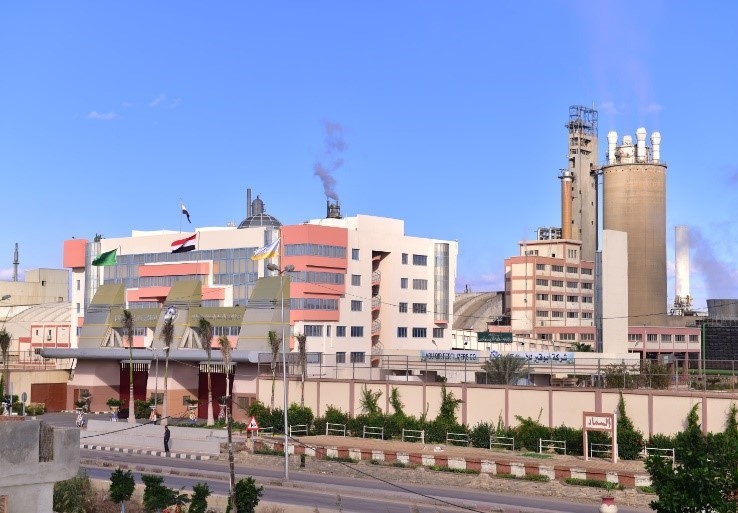
 Abu Qir Fertilizers and Chemical Industries has approved a $5.6 million coated urea project in Egypt with output capacity of 400 tonnes a day, marking a shift by one of the country’s biggest nitrogen producers towards higher-value fertiliser products at a time when efficiency, export resilience and feedstock risk are all shaping boardroom decisions across the sector. The company said the project should be completed within 12 months and presented it as part of a strategy to raise the value of its product mix and expand output of high-efficiency fertilisers.
 The move is notable because Abu Qir has long been identified with large-scale conventional nitrogen fertiliser production rather than specialty products. Company material describes the producer as one of the largest fertiliser manufacturers in Egypt, with a dominant domestic market role and a long-established base on Abu Qir Bay east of Alexandria. That gives the investment a significance beyond its modest size: it signals an attempt to capture better margins from differentiated products rather than relying solely on bulk volumes in a business heavily exposed to commodity price swings and gas availability.
Coated urea is designed to release nitrogen more gradually than standard urea, helping crops absorb nutrients over a longer period and cutting losses from volatilisation and leaching. Agricultural studies and reviews published over the past two years have found that controlled-release and coated urea products can improve nitrogen-use efficiency and, in many cases, lower emissions or nutrient losses compared with conventional fertiliser application. That is why producers across several markets have been exploring specialty fertilisers not only as a commercial upgrade, but also as a response to pressure for cleaner and more efficient farm inputs.
For Egypt, the commercial logic is sharpened by the structure of the fertiliser business itself. Nitrogen producers depend heavily on natural gas both as feedstock and as an energy source, and the country’s industry has faced repeated disruption from gas shortages. Abu Qir’s own investor-relations page lists material events tied to stoppages, pressure fluctuations and the later resumption of natural-gas supply during 2024 and 2025. Reuters also reported in 2025 that fertiliser manufacturers in Egypt cut output after gas supplies were slashed, with domestic gas production falling sharply and the country increasingly constrained by tighter energy balances.
Against that backdrop, a downstream coated-urea line offers two advantages. First, it allows Abu Qir to seek greater value from each tonne sold by moving into a product marketed on performance rather than only price. Second, it broadens the company’s positioning at a time when fertiliser buyers are paying closer attention to yield efficiency, environmental impact and application cost. The economics of specialty products are not immune to feedstock shocks, but they can offer some insulation from the brutal margin compression that often hits commodity fertiliser cycles.
There is also a wider market story. Global fertiliser trade has been rattled by conflict-linked shipping risks and higher input costs, with Reuters reporting this month that prices surged as war disrupted regional flows and threatened deliveries during a critical planting period. For producers in North Africa and the Middle East, that volatility can create openings as well as hazards: stronger prices may support earnings, but freight costs, gas insecurity and supply-chain disruptions can just as easily erode them. Companies with a broader portfolio may be better placed to navigate that instability.
Abu Qir has been signalling for some time that it wants to modernise beyond its legacy profile. Its corporate material highlights development and investment projects, sustainability initiatives and an expanding focus on energy management. The company was identified in an international case study as among the first fertiliser plants in Egypt certified under ISO 50001 energy-management standards, underscoring a management emphasis on efficiency and operating discipline. A coated urea project fits that narrative neatly: it is small enough to execute without the balance-sheet strain of a major greenfield expansion, yet visible enough to show strategic intent.
The immediate question for investors and farm-input buyers will be execution. A 400-tonne-a-day line is meaningful in specialty fertilisers, but the commercial outcome will depend on commissioning on schedule, customer uptake and the company’s ability to market coated urea either into domestic agriculture or export channels where buyers will pay for enhanced performance. Another variable is whether Egypt’s gas supply picture stabilises enough to support smoother industrial operations after the disruptions recorded over the past two years.
Topics
Live News