
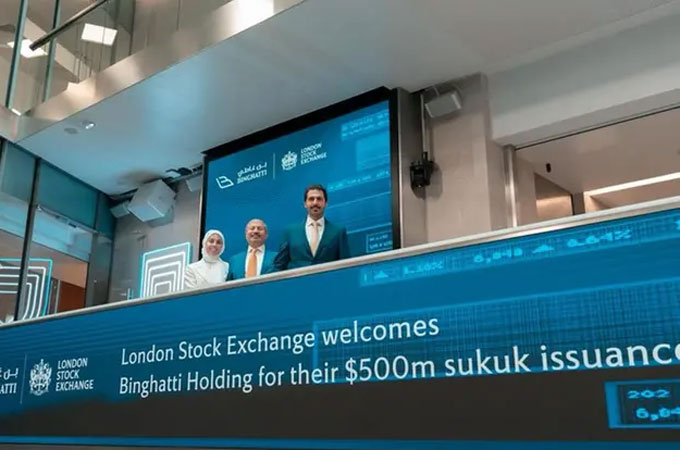
 Dubai-based developer Binghatti has priced a $500 million five-year sukuk, signalling sustained investor demand for Gulf real estate credit even as global borrowing costs remain elevated. The Islamic bond was set with a profit rate of 8.375%, translating to a spread of 461.3 basis points over comparable US Treasuries, according to transaction details disclosed to the market.
Order books for the sukuk climbed beyond $2.2 billion at their peak, reflecting interest from regional and international investors seeking yield in Shariah-compliant instruments. The strong subscription allowed Binghatti to price within guidance, despite volatility across global credit markets and heightened scrutiny of property-linked issuers.
The issuance adds to a growing pipeline of sukuk from Dubai-based developers, underlining the emirate’s position as one of the most active hubs for Islamic capital markets. Proceeds from the deal are expected to support general corporate purposes, including refinancing existing obligations and funding ongoing development projects across Binghatti’s residential portfolio.
Binghatti has expanded rapidly over the past few years, with a focus on branded and design-led residential towers in key Dubai locations such as Business Bay and Jumeirah Village Circle. The company has partnered with global luxury brands for several high-profile projects, a strategy that has helped differentiate its offerings in an increasingly competitive market.
Market participants note that the pricing of the sukuk reflects both issuer-specific factors and broader conditions in the global fixed income landscape. While benchmark yields have stabilised compared with peaks seen during aggressive monetary tightening cycles, credit spreads for property developers remain wider than pre-pandemic norms. Investors continue to demand compensation for refinancing risk, execution challenges and exposure to real estate cycles.
At the same time, demand for Gulf sukuk has been supported by ample regional liquidity, particularly from banks, asset managers and family offices seeking diversified income streams. Islamic bonds also benefit from structural features that appeal to buy-and-hold investors, including asset backing and predictable cash flows.
Dubai’s property market has shown resilience, underpinned by population growth, tourism inflows and sustained interest from foreign buyers. Transaction volumes and prices in several segments have held firm, providing developers with greater confidence to tap capital markets. Analysts caution, however, that supply additions over the medium term will need to be absorbed without eroding margins.
The Binghatti transaction follows a series of sizeable sukuk and bond deals from Gulf corporates, highlighting the region’s increasing reliance on debt markets to fund expansion. Issuers have taken advantage of windows of investor appetite to lock in longer tenors, reducing near-term refinancing pressure.
For investors, the deal offers exposure to Dubai real estate through a Shariah-compliant structure, with a yield that compares favourably to similarly rated credits globally. The oversubscription suggests that appetite remains robust, particularly for issuers with established track records and clear project pipelines.
Rating considerations continue to play a role in shaping demand and pricing. While developers face inherent cyclicality, those with diversified portfolios, pre-sales visibility and manageable leverage are viewed more favourably. Market feedback indicates that Binghatti’s branding strategy and execution record were key factors in attracting orders.
Topics
UAE