
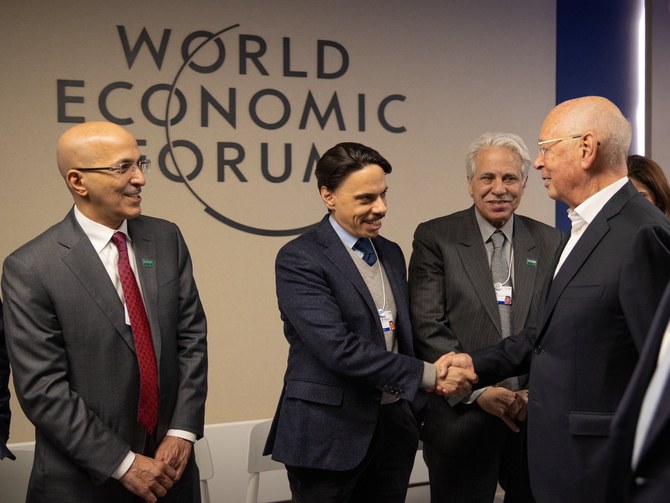
 Saudi Arabia has wrapped up a high-profile appearance at the 56th Annual Meeting of the World Economic Forum in Davos, using the gathering to lock in strategic agreements and secure a major global convening that will shift part of the forum’s focus to the Red Sea coast later this year. The Kingdom confirmed it will host the WEF Global Collaboration and Growth Meeting in Jeddah on April 22–23, a move officials framed as central to efforts to stabilise growth, rebuild confidence and deepen cross-border cooperation.
The Davos engagement brought together Saudi ministers, business leaders and sovereign investors for a dense schedule of bilateral meetings and public sessions. The Jeddah meeting, titled “Building Common Ground and Reviving Growth”, is expected to convene heads of state, central bankers, chief executives and multilateral institutions, reflecting Riyadh’s ambition to position itself as a bridge between advanced and emerging economies at a time of uneven recovery, tighter financial conditions and shifting supply chains.
Saudi officials said the Davos outcomes extended beyond the hosting announcement. Memoranda of understanding and investment commitments were discussed across clean energy, advanced manufacturing, logistics, tourism and digital infrastructure, aligning with Vision 2030’s push to diversify revenue streams and attract long-term capital. Executives involved in talks described momentum around large-scale projects in renewables, green hydrogen and grid modernisation, alongside data centres and cloud services to support artificial intelligence adoption.
The Kingdom’s delegation underscored macroeconomic stability and regulatory reforms as anchors for investor confidence. With public investment vehicles active across domestic and international markets, Saudi Arabia presented itself as both a destination for foreign capital and a partner deploying patient financing. Officials highlighted streamlined licensing, expanded public-private partnerships and incentives for high-value manufacturing, arguing these measures reduce execution risk for global firms.
Davos discussions also placed Saudi Arabia within a broader geopolitical and economic recalibration. As trade routes are reassessed and energy systems transition, the Kingdom emphasised logistics corridors linking Asia, Africa and Europe, as well as its role in energy markets during a period of volatility. Industry leaders noted that clarity around long-term policy frameworks, particularly for power purchase agreements and carbon markets, would be critical to sustaining deal flow.
The decision to stage a WEF meeting in Jeddah signals a deliberate decentralisation of global economic dialogue. While the annual meeting in Davos remains the forum’s flagship, the Jeddah gathering aims to translate debate into project pipelines, with a regional lens that includes the Middle East, Africa and South Asia. Organisers said the agenda will focus on growth revival, financing for development, technology diffusion and labour market transitions.
Saudi Arabia’s pitch at Davos leaned heavily on execution track records. Officials cited progress on giga-projects, expanding tourism capacity, and rising non-oil private sector activity as evidence that diversification targets are achievable. Corporate participants acknowledged that delivery timelines and cost controls will be scrutinised, but many pointed to co-investment structures and risk-sharing mechanisms as mitigating factors.
Energy transition remained a central theme. Saudi representatives reiterated commitments to scale renewables, invest in carbon capture and develop hydrogen value chains, while maintaining energy security. Analysts said the Kingdom’s ability to combine incumbent energy expertise with new technologies gives it leverage in shaping pragmatic transition pathways, particularly for emerging markets that prioritise affordability.
Digitalisation and human capital featured prominently in side meetings. Partnerships discussed in Davos covered skills development, research collaboration and start-up financing, reflecting competition for talent and innovation. Saudi Arabia positioned its expanding education and training initiatives as complements to capital investment, aiming to localise value creation.
Topics
Saudi Arabia