
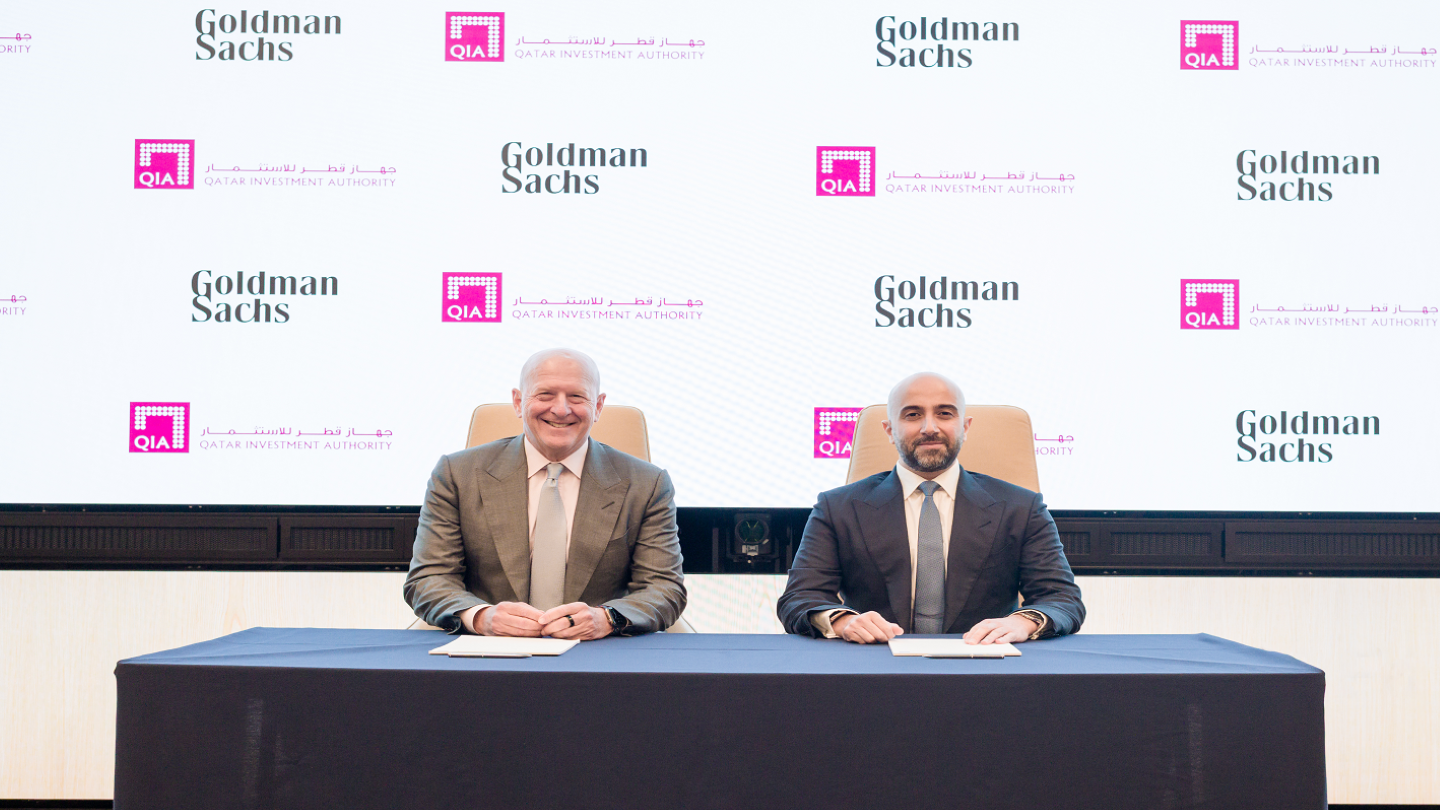
 Qatar’s sovereign wealth fund and a major Wall Street asset manager have agreed to significantly expand an investment partnership that underscores the Gulf state’s push to deploy capital alongside global financial institutions while giving the US firm deeper access to long-term funds. Qatar Investment Authority and Goldman Sachs Asset Management have signed a memorandum of understanding that sets the framework for deploying up to $25 billion across a range of strategies over several years, according to people familiar with the arrangement and public statements from the two sides.
The agreement builds on an existing relationship that has already seen joint investments across private equity, credit and infrastructure, and it reflects a broader trend among Gulf sovereign wealth funds to seek co-investment models that combine their capital strength with the sourcing and structuring capabilities of global managers. For Goldman’s asset management arm, the partnership provides scale and stability at a time when competition for institutional capital has intensified and fundraising conditions remain uneven across markets.
Under the terms outlined, the partnership will target opportunities worldwide, with a focus on private markets where large pools of patient capital are viewed as an advantage. Areas under consideration include private credit, buyouts, growth equity and infrastructure-linked assets, sectors that have gained prominence as higher interest rates and geopolitical uncertainty reshape investor preferences. While specific allocations and timelines have not been disclosed, officials have indicated that investments will be made over multiple vintages rather than in a single deployment, allowing flexibility to respond to market conditions.
The Qatari fund, which manages hundreds of billions of dollars in assets, has steadily increased its exposure to alternative investments as part of a strategy to diversify away from hydrocarbons and build long-term returns for future generations. Partnerships with established global managers have become a central pillar of that approach, enabling access to proprietary deal flow and specialised expertise without building every capability in-house. The Goldman arrangement follows similar tie-ups with other international investment firms, reflecting a deliberate effort to spread risk across managers and geographies.
For Goldman Sachs Asset Management, the agreement comes as the firm continues to expand its alternatives platform, which has been a key growth engine alongside traditional public-market strategies. Asset managers across Wall Street have been under pressure to demonstrate consistent performance and differentiated access to deals, particularly in private credit, where demand from investors seeking yield has surged. Securing a large, multi-year commitment from a sovereign investor strengthens Goldman’s position as it competes with rivals for transactions and co-investment opportunities.
Market participants note that such partnerships also carry strategic value beyond the capital itself. Working closely with a Gulf sovereign fund can enhance a manager’s presence in the Middle East, a region that has become increasingly influential in global finance as energy revenues and fiscal surpluses are channelled into overseas assets. At the same time, sovereign investors benefit from the global reach of firms like Goldman, particularly in North America and Europe, where access to high-quality private assets can be competitive.
The memorandum of understanding is not a binding commitment to deploy the full $25 billion, and individual investments will be subject to due diligence and approvals by both parties. This structure is typical of large strategic partnerships, allowing each side to assess opportunities on a case-by-case basis while signalling long-term intent. Analysts say such flexibility is especially important given ongoing volatility in valuations, regulatory scrutiny in some jurisdictions and shifting monetary policy expectations.
Private credit is widely expected to feature prominently in the collaboration, reflecting its growing role as banks retrench from certain types of lending. Infrastructure, particularly assets linked to energy transition and digital connectivity, is also seen as a likely area of focus, aligning with Qatar’s broader economic diversification goals and global demand for capital to fund large-scale projects. Buyouts and growth investments may complement these themes, depending on market conditions and sector outlooks.
The expanded partnership also highlights how sovereign wealth funds are evolving from passive allocators into active partners with influence over strategy and governance. By committing capital alongside a global manager, QIA can shape investment priorities while retaining oversight, a model that has gained traction among large state investors seeking greater control and transparency.
Topics
Spotlight