
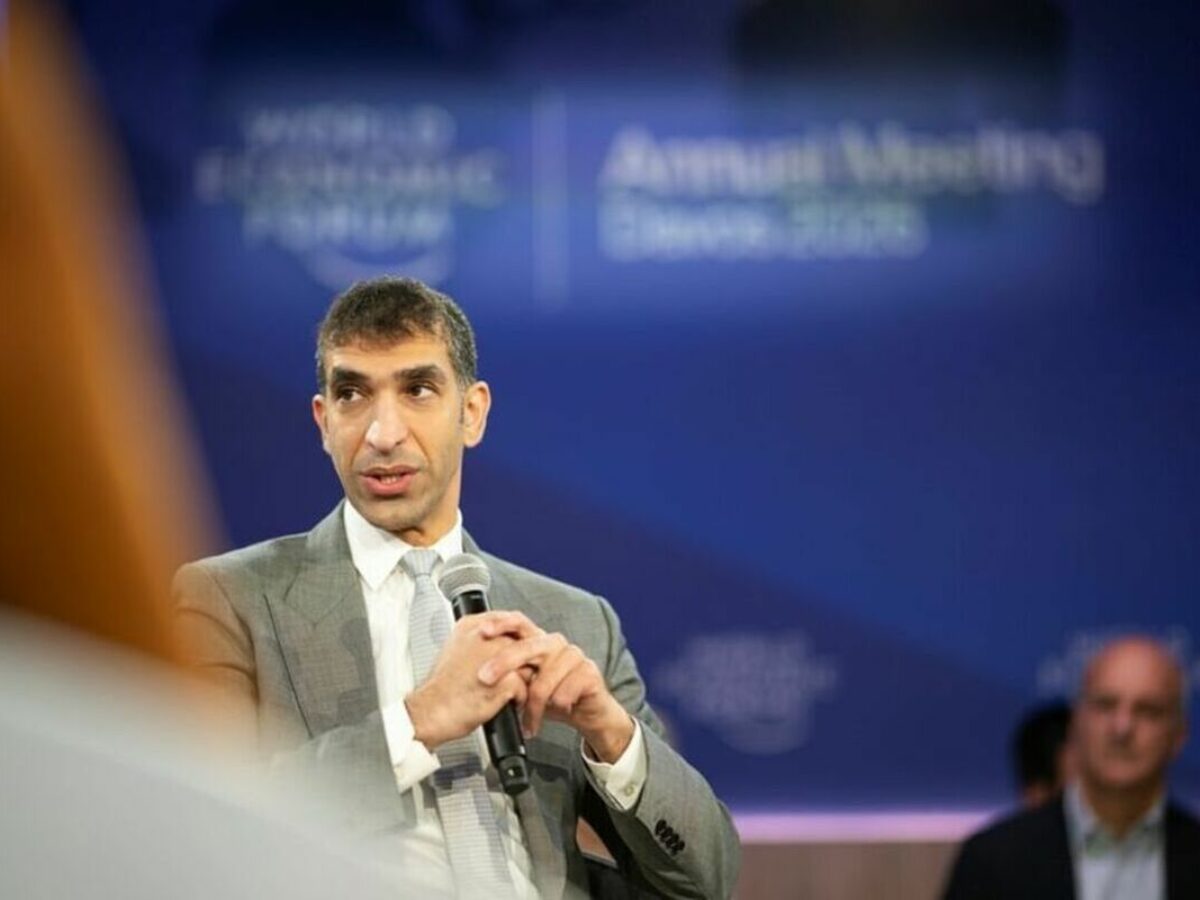
 Dr Thani bin Ahmed Al Zeyoudi joined the United Arab Emirates delegation at the World Economic Forum in Davos, using a packed schedule of ministerial and business meetings to reaffirm the country’s push for open, rules-based and mutually beneficial global trade ties at a time of shifting economic alignments.
The Minister of Foreign Trade held discussions with counterparts from Europe, Asia, Africa and the Americas, alongside senior executives from multinational firms, focusing on market access, supply-chain resilience and investment flows. The engagements took place against a backdrop of slower global growth, persistent geopolitical tensions and intensifying competition over industrial policy, factors that have put pressure on cross-border trade and capital movement.
Al Zeyoudi emphasised that the UAE views trade as a cornerstone of long-term economic stability and diversification, arguing that predictable rules and cooperation remain essential for growth. He highlighted the country’s strategy of deepening partnerships through comprehensive economic agreements, sector-specific accords and regulatory alignment, positioning the UAE as a hub linking emerging and developed markets.
Officials accompanying the delegation said the conversations at Davos reflected growing interest in the Gulf region’s role as a logistics, manufacturing and services centre. The UAE’s geographic position, advanced infrastructure and investor-friendly framework were presented as advantages for companies seeking to diversify supply chains and reduce exposure to single-market risks.
The minister’s meetings also addressed the evolution of digital trade, clean energy supply chains and food security, areas increasingly shaping global commerce. Al Zeyoudi noted that digitalisation and sustainability are no longer peripheral issues but central to trade policy, requiring updated standards and cross-border cooperation. He pointed to the UAE’s investments in ports, free zones and digital platforms as part of an effort to support faster, more transparent trade flows.
Trade analysts say the UAE’s message at Davos aligns with its broader economic agenda, which aims to lift non-oil trade volumes and attract foreign direct investment while maintaining openness. The country has expanded its network of trade agreements over the past two years, covering partners across Asia, the Middle East, Africa and Latin America, with several deals already entering into force and others under negotiation.
Participants in the Davos meetings indicated that many governments are reassessing trade strategies amid rising protectionism elsewhere. In this context, the UAE’s emphasis on partnership and market access was framed as a counterweight to inward-looking policies. Al Zeyoudi stressed that trade need not be a zero-sum game, arguing that collaborative frameworks can deliver shared gains even during periods of global uncertainty.
The World Economic Forum gathering provided a platform for informal exchanges as well as structured sessions, allowing the UAE delegation to gauge sentiment among policymakers and investors. According to people briefed on the discussions, there was particular interest in the UAE’s role in facilitating South-South trade and in linking fast-growing economies with established markets through logistics corridors and financial services.
Energy transition was another theme woven into the trade talks. Al Zeyoudi highlighted opportunities arising from clean energy technologies, critical minerals and low-carbon manufacturing, noting that trade policies will influence how quickly such sectors scale. He underscored the importance of aligning trade rules with climate objectives without creating unnecessary barriers.
Business leaders attending the meetings cited regulatory clarity and political stability as factors sustaining confidence in the UAE. Several executives discussed expansion plans in sectors ranging from advanced manufacturing to digital services, reflecting the country’s efforts to broaden its economic base beyond hydrocarbons.
Topics
UAE