
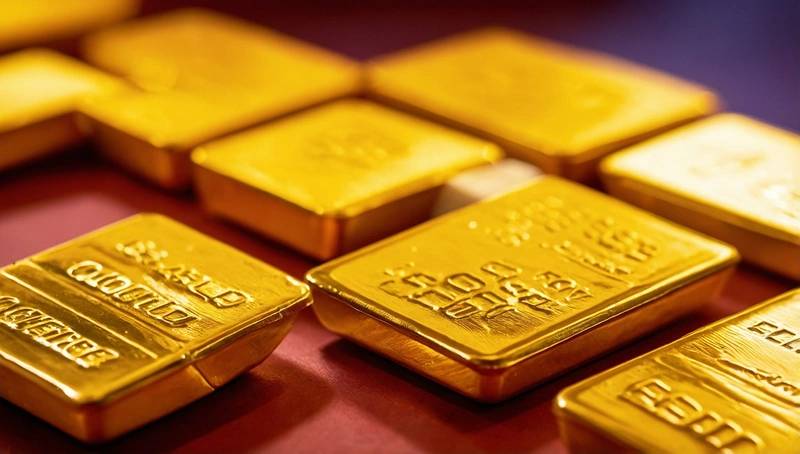
The price rise comes after a period of stagnation, with the precious metal benefiting from a shift in the global economic landscape. Traders have responded to signals from the U. S. Federal Reserve, which has indicated a potential easing of its interest rate hikes in response to signs of a slowing economy. The expectation of a rate cut in the near future has driven both investors and traders to seek safe-haven assets, particularly gold.
Gold has historically been seen as a hedge against inflation and economic uncertainty, and as central banks across the world, including the Fed, take action to stimulate economic activity, the precious metal is often viewed as a store of value. With the dollar also under pressure, the appeal of gold as an alternative asset has only increased. The dollar’s softening makes gold more affordable for holders of other currencies, further driving demand.
The surge in gold prices has not gone unnoticed, particularly among institutional investors. Financial institutions have been increasingly turning to gold as a way to preserve capital amid growing concerns over inflation and geopolitical risks. As the Fed prepares for a potential shift in policy, many are recalibrating their portfolios to include more commodities, with gold standing out as a key beneficiary.
However, the upward movement of gold is not without its challenges. Analysts note that while the possibility of a rate cut has provided support, any signs of a stronger-than-expected U. S. economy could reverse these trends. Should inflation show signs of rising again or the economy accelerate, the Fed might reconsider its approach, leading to a rise in interest rates and a corresponding pressure on gold prices.
In addition, while gold has experienced growth in the short term, there are concerns about the sustainability of its rise. Despite the bullish outlook driven by softer dollar dynamics, some experts caution that gold’s ascent might be capped in the long run unless sustained by further monetary easing or significant global economic instability.
Global economic conditions remain a key determinant for gold’s trajectory. Economic slowdowns in major economies, such as those in the European Union and parts of Asia, could provide further tailwinds for gold prices. Conversely, a recovery in industrial activity or a rebound in risk sentiment could dampen demand for the safe-haven asset.
Geopolitical risks also continue to factor into the equation. Tensions in key regions, including the Middle East and Eastern Europe, can influence gold prices, particularly if these tensions lead to market volatility or economic disruptions. However, market observers believe that even in the absence of major geopolitical shocks, gold’s current trajectory remains relatively robust.
Topics
Live News