
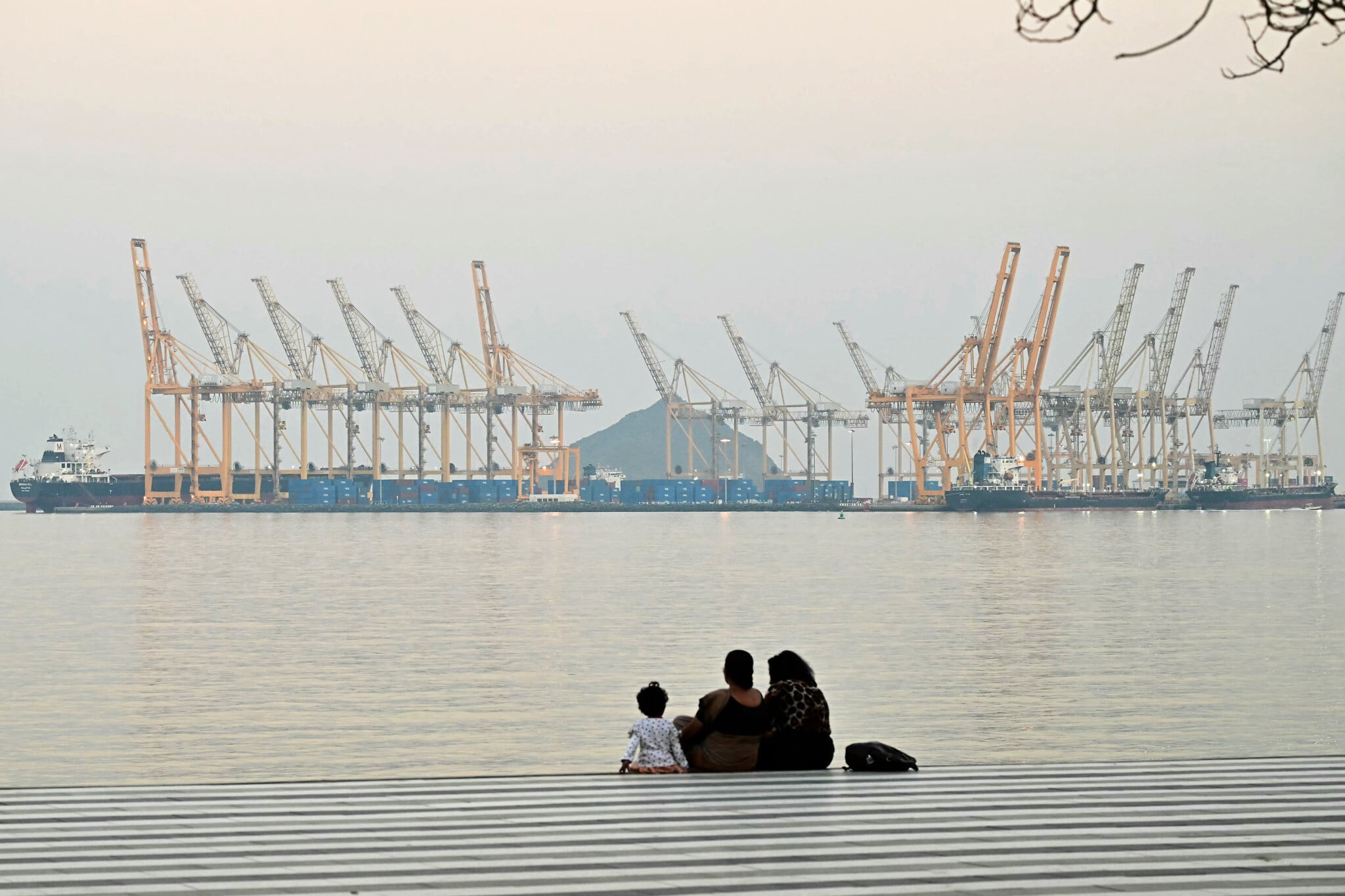
 The UAE has welcomed a decision by the International Maritime Organization’s Legal Committee condemning Iran’s closure of the Strait of Hormuz, its attacks and threats against vessels, and reported moves to interfere with navigation in one of the world’s most sensitive shipping corridors. Abu Dhabi said the decision, adopted at the committee’s 113th session, reaffirmed that transit passage through the strait must not be impeded and demanded that Iran stop attacks, remove any mines it may have laid, and comply with international law.
 Mohamed Khamis Saeed AlKaabi, the UAE’s permanent representative to the IMO, said the committee had “stood united” in defence of what he described as a principled international maritime order. The UAE said the decision had been tabled by Abu Dhabi and followed earlier IMO action in March, when the organisation’s council condemned threats and attacks on merchant shipping and called for an internationally coordinated safety framework for vessels trapped in or near the Gulf.
The legal committee’s move comes at a delicate moment. Iran said on Friday that the Strait of Hormuz was open to commercial shipping during the ceasefire period, but the reopening was accompanied by new ambiguity after Iranian officials indicated that vessels would still need coordination or authorisation linked to Iranian authorities and the Islamic Revolutionary Guard Corps. That has left shipowners, insurers and governments weighing whether the waterway is truly back to normal or only conditionally accessible.
For the UAE, the dispute is about far more than diplomatic wording. The Strait of Hormuz remains the main outlet for a large share of Gulf crude and liquefied natural gas exports, and any prolonged disruption quickly feeds into freight costs, insurance premiums, fuel markets and wider inflation expectations. Reuters reported in March that traffic through the waterway had fallen close to a standstill after the conflict erupted on February 28, with the IMO saying around 20,000 seafarers on nearly 2,000 ships were affected and that at least 17 vessel incidents had been recorded, causing seven deaths.
The March session of the IMO council had already laid the groundwork for the latest legal condemnation. It strongly denounced threats and attacks against merchant ships and the purported closure of the strait, saying navigational rights and freedoms in accordance with international law must be respected. It also urged states to work on a provisional safe maritime framework to help evacuate merchant vessels stranded in the Gulf while protecting seafarers from further harm. That earlier action gave political weight to the UAE’s argument that the maritime dispute was not a narrow bilateral quarrel but a challenge to established rules governing international shipping lanes.
Abu Dhabi has been sharpening that line in public statements over the past week. Sultan Ahmed Al Jaber, chief executive of ADNOC, said on April 12 that the strait had never belonged to Iran to close or restrict, adding that any such disruption would threaten global energy, food and health security. The EU has taken a similar position, calling on Tehran to drop any transit fee plans and warning that charging ships to use an international chokepoint would set a dangerous precedent for global trade.
Markets reflected the tension and the uncertainty. Oil prices fell sharply on Friday after Iran said the waterway was open and traders began stripping out part of the risk premium built up during weeks of disruption. Brent crude settled down about 9 per cent at $90.38 a barrel, while U. S. crude dropped more than 11 per cent, one of the steepest single-day moves of the crisis. Yet the fall in prices did not erase deeper concerns over the damage already done to supply flows and confidence in safe navigation. Reuters calculations and analyst estimates published on Friday put lost crude and condensate volumes since the war began at more than 500 million barrels.
That is why the IMO committee’s language matters. By condemning reported mine threats, attacks on Gulf states and Jordan, and what the UAE described as a toll system on passing ships, the committee signalled that coercive control over an international strait would not be normalised through wartime practice or political bargaining. The committee also invited the IMO secretary-general to continue monitoring incidents and their impact on shipping, trade, logistics, seafarers and the marine environment, adding a mechanism for further scrutiny if tensions flare again.
Topics
Live News