
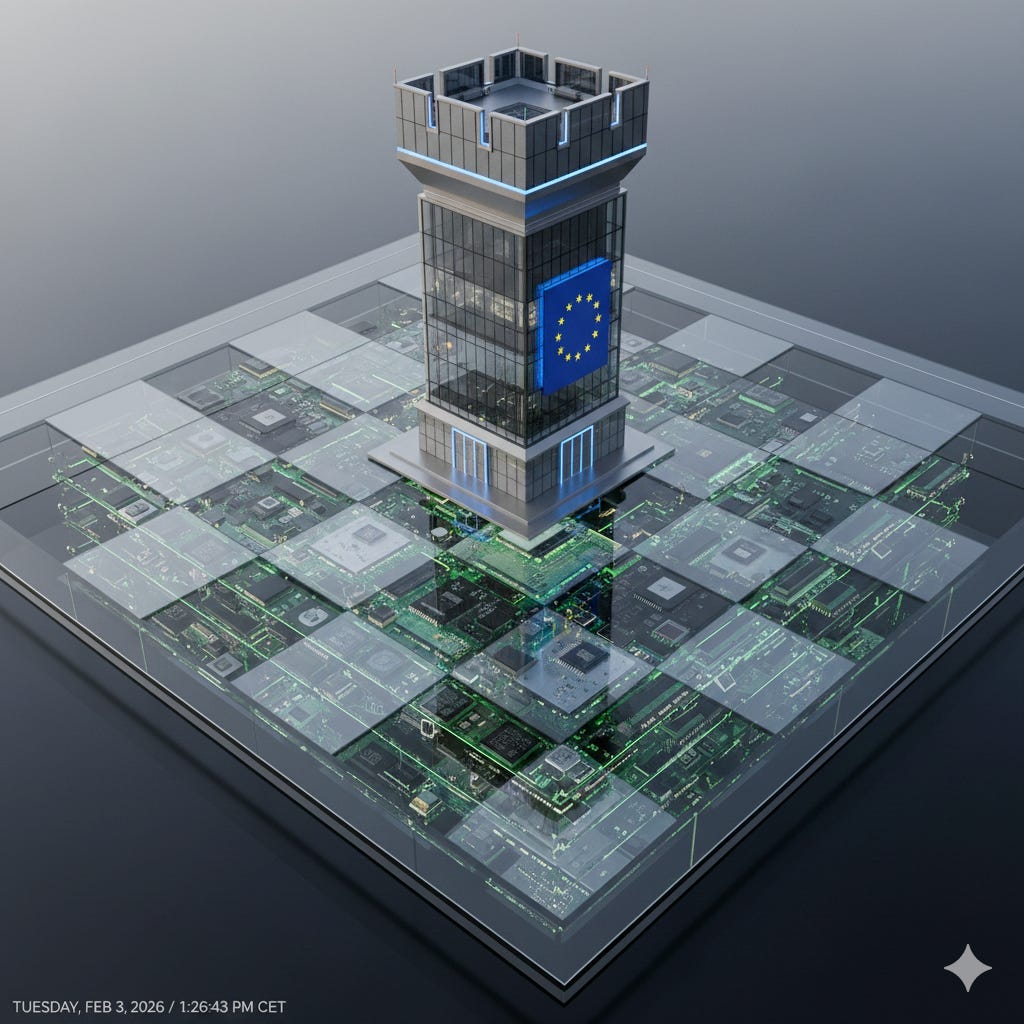
 OVHcloud is stepping up its push into Europe’s defence and high-security cloud market, expanding dedicated teams and offering cloud and artificial intelligence infrastructure aimed at military and other critical environments as governments across the region place greater emphasis on digital sovereignty and control over sensitive data. The French group said on March 31 that it was accelerating its defence activities in Europe and recruiting specialists from the armed forces and the defence industry to meet demand.
 The move places OVHcloud more directly in a strategic debate that now stretches well beyond commercial technology. European policymakers, regulators and military planners have become more vocal about reducing reliance on non-European providers for infrastructure that underpins communications, data storage, cyber resilience and AI workloads. Maria Luís Albuquerque, the European Commissioner for Financial Services, said in February that Europe must retain control over key technologies, while Dutch central bank supervision chief Steven Maijoor warned that reliance on a small number of cloud providers leaves institutions more exposed to cyber risk.
OVHcloud said the backdrop is the faster digitalisation of militaries, the growing use of real-time data processing and the wider adoption of AI in operations. It argued that defence customers increasingly need systems able to support resilience, cybersecurity and compliance with national and European frameworks, while also keeping control over infrastructure, data and operations. The company said its offer includes large-scale cloud infrastructure, multi-local architecture and three-availability-zone regions intended to improve continuity and resilience, alongside security and compliance features including SecNumCloud standards in France.
Octave Klaba, who returned to the chief executive role, has been positioning the group more broadly around sovereign infrastructure. In January he told analysts OVHcloud was seeking a cross-border solution to Europe’s AI infrastructure drive and had begun discussions with potential partners across six or seven countries. That ambition goes beyond a narrow defence pitch and suggests the company sees military, regulated-industry and public-sector demand as part of the same wider market for European-controlled computing capacity. Reuters reported that OVHcloud’s public cloud revenue rose 15.8 per cent in its fiscal first quarter, outpacing its private cloud business and underlining how strongly AI-linked demand is shaping its growth strategy.
The company has reinforced that direction with acquisitions and product development. On March 25 it announced a binding agreement to acquire Dragon LLM, a French developer of specialised generative AI models designed for regulated industries, and said the deal would launch its AI lab. OVHcloud said the technology would help it offer new generative AI services for sensitive data that can be deployed both in the cloud and on-premises, a capability likely to appeal to defence, public administration and other customers that cannot move all workloads into standard public cloud environments.
Demand conditions are moving in OVHcloud’s favour, even if the commercial opportunity remains difficult. Reuters reported in January that EU member states’ defence spending reached €343 billion in 2024 and was likely to hit €381 billion in 2025, with investment spending also climbing sharply. At the same time, Europe’s concern over strategic technology dependence has intensified. A Reuters Breakingviews analysis last year cited Mario Draghi’s competitiveness report as saying Amazon, Microsoft and Google control around two-thirds of the EU cloud market, illustrating the scale of the challenge facing European providers trying to dislodge entrenched hyperscalers.
That gap helps explain why sovereignty has become a selling point in itself. The European Parliament’s policy study on software and cyber dependencies described sovereign cloud and AI as a strategic pillar for rebuilding technological autonomy, including EU-controlled infrastructure, open standards and public procurement tools that favour resilience and multisourcing. The EuroHPC Joint Undertaking is also building out AI Factories across Europe to widen access to computing power and support the development of European AI models and skills. Those initiatives do not guarantee commercial winners, but they show that the policy environment is becoming more supportive of homegrown infrastructure providers.
Topics
Technology