
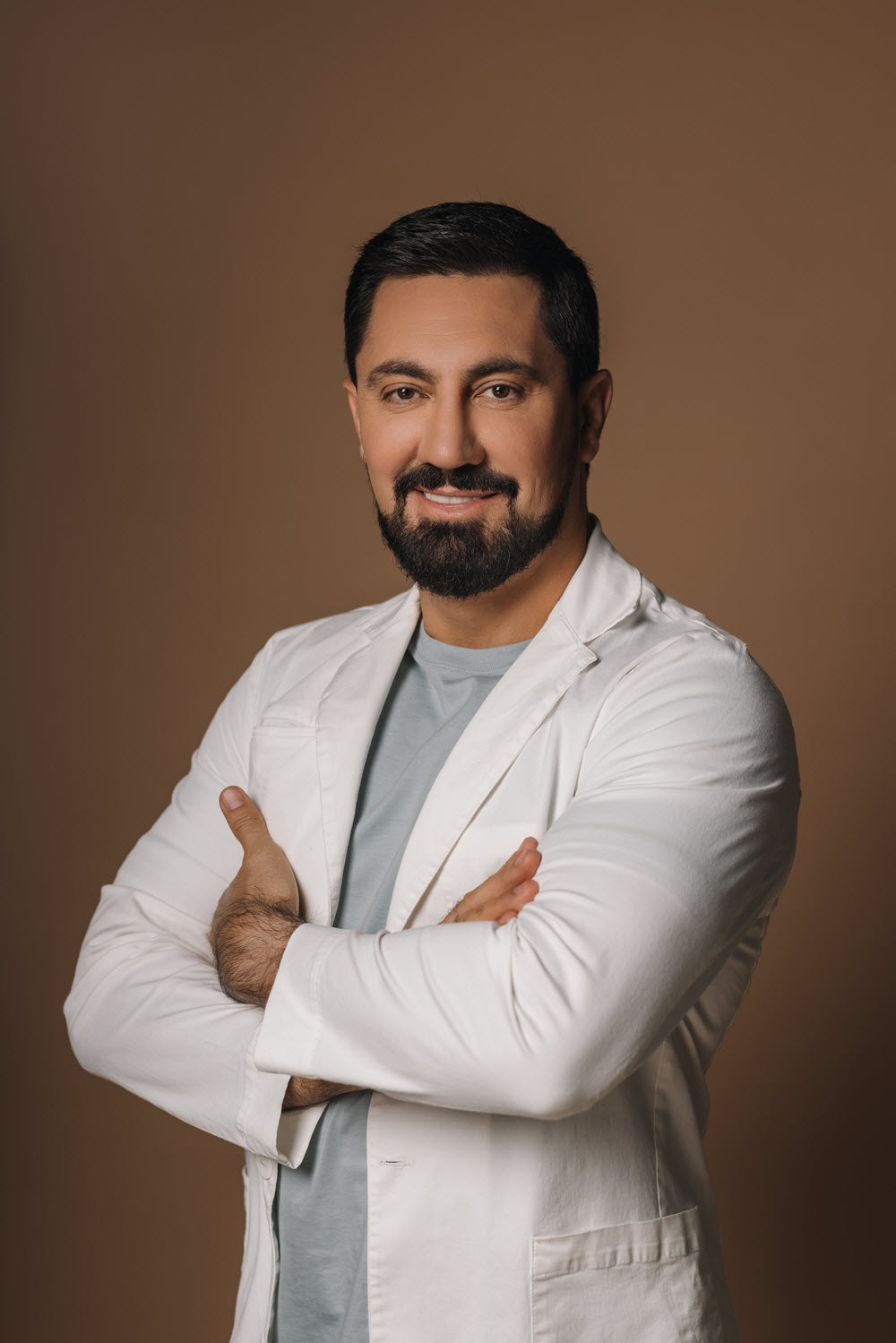
The renewed focus on his work comes as Dubai continues to tighten standards across cosmetic care while promoting itself as a medical and wellness destination. Dubai Health Authority guidance stresses that licensed health professionals and facilities must meet safety and quality requirements, and the regulator has also issued updated standards for non-surgical cosmetic procedures, underlining how closely the sector is being watched as demand grows.
Khachatrian’s technique is being described in feature coverage and clinic-linked material as a tension-controlled, multi-layer wound-closure approach intended to preserve blood supply, reduce trauma and support finer scars. That language aligns in broad terms with established plastic-surgery principles: peer-reviewed literature on scar revision and wound closure shows that tension management, layered closure and careful handling of tissue can materially influence scar width, healing quality and complication rates.
What remains less clear is the extent to which Ultra-Thin Seam itself has been independently validated in academic literature under that name. Publicly available coverage located on Tuesday, 7 April 2026, points mainly to clinic biographies, lifestyle and business features, and promotional-style articles describing the method’s benefits. I did not locate a peer-reviewed clinical paper specifically naming or evaluating Ultra-Thin Seam as a distinct proprietary technique, which means claims about it setting “new benchmarks” should be treated with some caution until backed by comparative outcomes data in recognised medical journals.
That distinction matters in a city where aesthetic medicine has become both a healthcare business and a branding exercise. AMWC Dubai, one of the sector’s industry platforms, says the city has more than 400 aesthetic clinics and one of the world’s highest per-capita concentrations of cosmetic, plastic and dermatology doctors. Competition on that scale has pushed clinics to differentiate themselves through specialised techniques, shorter recovery claims and a stronger emphasis on natural-looking outcomes rather than overt transformation.
Khachatrian appears to have built his Dubai profile around precisely that positioning. Valiant Clinic says he serves local residents and medical-tourism patients, while external feature coverage portrays him as working with an international clientele seeking low-visibility results and structural precision. His online profiles also show earlier associations with Quttainah Specialized Hospital, suggesting a regional professional presence that predates the latest publicity around Valiant Clinic.
From a clinical standpoint, the underlying ideas are not outside mainstream surgical thinking. Reviews on scar management and revision consistently point to incision planning, minimising wound tension, preserving vascularity and layered closure as central to better healing. Other studies have also examined moderate-tension layered closure as a way to reduce scar widening and improve postoperative appearance. That does not prove Ultra-Thin Seam is unique, but it does suggest that the principles being promoted are rooted in recognised reconstructive and aesthetic practice.
For patients, the commercial appeal is obvious. Aesthetic surgery buyers in Dubai tend to be highly sensitive to downtime, privacy and scar visibility, especially in facial and body procedures where signs of surgery can undermine the desired result. Surgeons who can credibly market refinement in closure and healing are therefore likely to command premium attention. For regulators and for the wider profession, however, the key test is not branding but evidence: complication rates, revision frequency, patient-reported outcomes and long-term scar assessment.
Topics
Business