
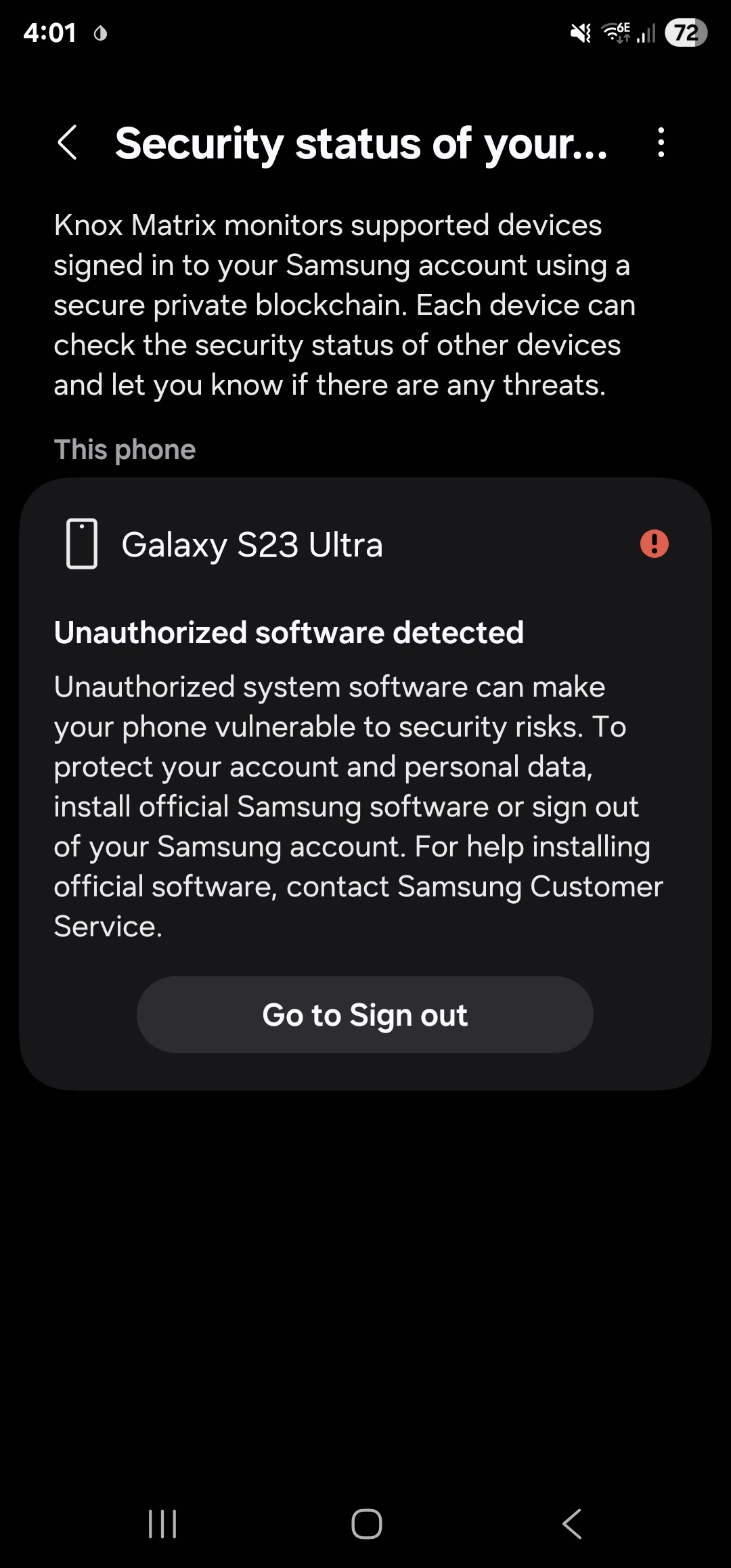
 Samsung has issued a security fix for a kernel-level flaw in its Knox framework that exposed Galaxy devices to memory-corruption attacks capable of undermining core protections on affected handsets.
The vulnerability, tracked as CVE-2026-20971, affects a security component embedded in Samsung’s Android ecosystem and was reported by researchers at LucidBit Labs. The flaw sits in the kernel layer, where successful exploitation can carry severe consequences because the kernel controls memory, processes, hardware access and permissions across the device.
The issue is being treated as significant because Knox is positioned as one of Samsung’s central security pillars across consumer, enterprise and government-facing Galaxy products. Knox is used to help protect sensitive data, enforce device integrity checks, separate work and personal profiles, support secure boot controls and reinforce protections around services such as Secure Folder and enterprise mobility management.
Memory-corruption flaws can allow attackers to manipulate how software stores and retrieves data, potentially creating a path to crash security services, bypass protections, escalate privileges or execute code outside normal application limits. In a mobile kernel context, such weaknesses are especially sensitive because exploitation can move an attacker closer to system-level control.
Samsung’s patch closes the vulnerable code path and users are being advised to install the latest available software update through the device settings menu. Update availability may vary by model, region, carrier approval and support status, meaning some Galaxy users could receive the fix later than others. Devices outside Samsung’s active update window remain at greater risk if they are affected and cannot receive a security maintenance release.
The flaw is understood to affect a broad range of Galaxy smartphones released over several product generations. That scope places added pressure on enterprise administrators, who often manage mixed fleets of flagship, mid-range and older devices used by staff across markets. Security teams are expected to prioritise devices carrying business credentials, mobile banking tools, corporate mail, authentication apps and privileged workplace access.
No large-scale exploitation has been confirmed publicly, but kernel vulnerabilities in widely deployed mobile platforms are routinely watched by commercial spyware operators, cybercriminal groups and state-linked actors. Attackers typically seek such flaws because they can be chained with browser, messaging, media or application vulnerabilities to gain deeper access than a single app-level bug would permit.
The disclosure comes at a time when mobile device security has become a major concern for companies relying on smartphones as primary work tools. Hybrid work, cloud authentication, mobile approvals and encrypted messaging have made phones high-value targets. A compromised handset can expose not only personal data but also corporate documents, contact lists, location history, saved credentials and multi-factor authentication prompts.
Samsung has expanded software support windows across many Galaxy models over the past few years, offering longer security coverage for premium and selected mid-range devices. The policy has reduced the number of users stranded without patches, but the Android ecosystem still faces delays because updates pass through device makers, chipset suppliers, regional testing and carrier certification before reaching end users.
Security specialists generally recommend that Galaxy owners enable automatic updates, avoid sideloading applications from untrusted sources, remove unused apps, keep Google Play system updates current and restart devices after installing security patches. Enterprises are also expected to use mobile device management tools to confirm patch levels, block outdated devices from sensitive systems and separate personal use from corporate access where possible.
Knox has faced scrutiny before from researchers examining how secure containers, kernel protections and trusted execution environments behave under attack. Earlier studies showed that even layered mobile defences can be weakened if attackers find flaws below the application layer. The latest patch reinforces a broader lesson for device makers: security frameworks designed to protect users can themselves become high-value attack surfaces when they operate with elevated privileges.
For Samsung, the priority will be rapid deployment and clear guidance for customers using Galaxy devices in regulated sectors such as finance, healthcare, government contracting, logistics and aviation. These organisations often treat kernel-level mobile flaws as urgent because compromised phones may serve as entry points into cloud dashboards, internal communication systems and identity platforms.
Topics
Technology