
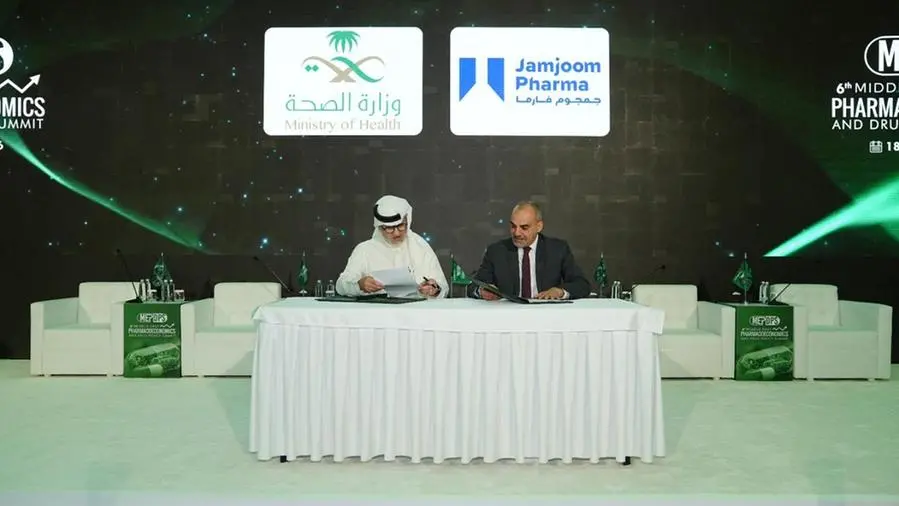
 Jamjoom Pharma has signed a memorandum of understanding with Saudi Arabia’s Ministry of Health to support the development of healthcare and pharmaceutical professionals through training programmes, educational initiatives and structured knowledge-sharing.
The agreement places the Jeddah-based drugmaker inside a wider national drive to strengthen the healthcare workforce, deepen local capability and align private-sector expertise with the Kingdom’s Health Sector Transformation Programme. The partnership is expected to focus on practical training, professional development and initiatives that improve the readiness of Saudi talent for roles across pharmaceutical manufacturing, healthcare delivery, regulatory work and patient-centred services.
The MoU comes as Saudi Arabia is pressing ahead with reforms designed to raise the quality of care, expand access to services and reduce dependence on imported expertise in critical health occupations. Workforce development has become a central plank of the sector’s transformation, with authorities seeking to match hospital expansion, digital health adoption and pharmaceutical localisation with a stronger pipeline of trained professionals.
Jamjoom Pharma’s participation gives the initiative a private-sector anchor in one of the Kingdom’s more established pharmaceutical manufacturers. The company has built a regional presence from its manufacturing base in Jeddah, with products spanning ophthalmology, dermatology, cardiovascular care, gastrointestinal medicines, respiratory treatments, endocrinology, diabetes care and consumer health. Its medicines are marketed across more than 36 countries, giving the company exposure to regulatory, commercial and clinical practices across the Middle East and Africa.
The agreement also reflects a broader shift in Saudi healthcare policy, where talent development is being treated as a strategic requirement rather than a support function. Training programmes tied to industry partners are intended to give graduates and working professionals stronger exposure to manufacturing standards, medicine safety, quality systems, pharmaceutical marketing, supply-chain resilience and the practical demands of a fast-expanding health economy.
For Jamjoom Pharma, the MoU offers an opportunity to strengthen its role in national health priorities while supporting its own long-term workforce needs. The company has been expanding its institutional profile since listing on the Saudi Exchange, where it trades under the healthcare sector. Its financial performance has reinforced its position as one of the Kingdom’s most visible home-grown pharmaceutical groups. During the first quarter of 2026, revenue reached SAR481.4 million, while net profit rose to SAR168.2 million, supported by demand for key brands and stronger operating efficiency.
Saudi Arabia’s health sector is undergoing one of the most consequential restructuring phases in the region. Authorities are building health clusters, expanding digital services, promoting preventive care and encouraging private-sector participation. These changes are creating demand for pharmacists, technicians, regulatory specialists, data-driven healthcare managers and manufacturing professionals who can operate in a more complex and quality-focused system.
Localisation targets have added urgency to the training agenda. Pharmacy-related activities, hospital pharmacy operations and other health professions are subject to rising workforce requirements, placing pressure on employers to invest in structured training rather than rely on conventional recruitment. Companies with established operations, quality systems and cross-border market experience are therefore being drawn into public-private partnerships aimed at closing skills gaps.
Educational initiatives under the MoU are likely to complement existing national efforts by linking classroom learning with practical exposure. Such programmes can help bridge one of the persistent challenges in healthcare workforce planning: ensuring that graduates enter the labour market with skills that match employer requirements. For the pharmaceutical sector, this includes knowledge of good manufacturing practice, pharmacovigilance, product registration, medical affairs, sales compliance and patient support services.
The Ministry of Health’s involvement also indicates that the partnership is not limited to corporate training. By working with a manufacturer active in several therapeutic areas, the ministry can use industry expertise to support wider professional development goals, including stronger awareness of medicine quality, better understanding of treatment pathways and closer alignment between healthcare providers and pharmaceutical suppliers.
Jamjoom Pharma’s expanding regional footprint adds another dimension to the agreement. As Saudi Arabia seeks to become a hub for life sciences and advanced healthcare services, domestic manufacturers are expected to play a larger role in supply security, export growth and knowledge transfer. Training local professionals within such companies can support both the Kingdom’s industrial strategy and its healthcare resilience agenda.
Topics
Saudi Arabia