
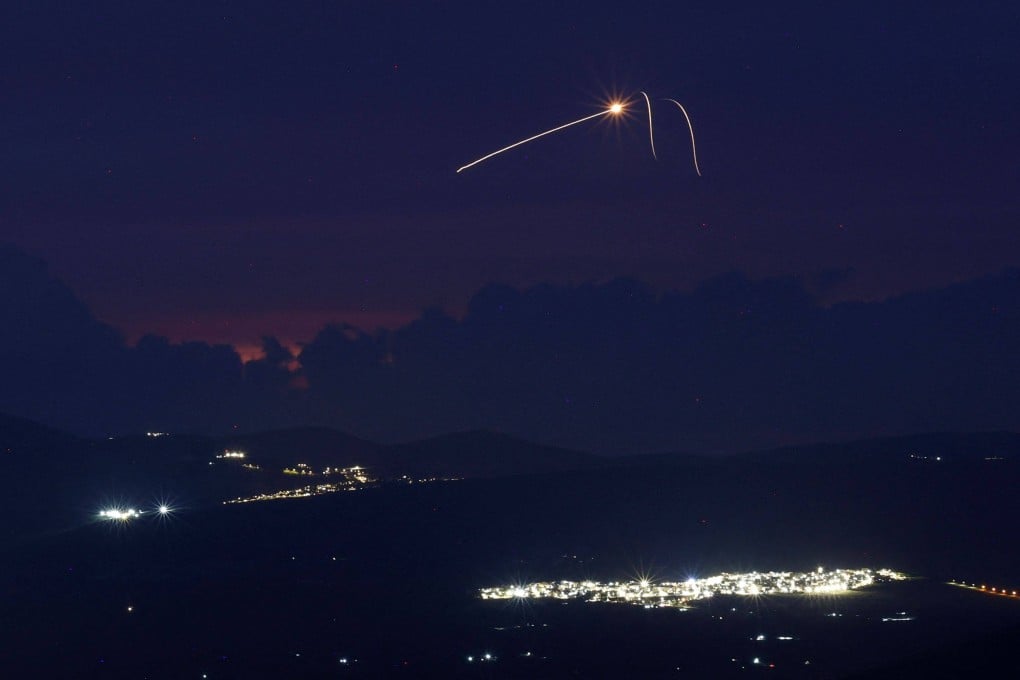
 Hezbollah’s low-cost drones have become one of the most disruptive threats facing Israeli troops in southern Lebanon, forcing soldiers to take cover from small, commercially available aircraft adapted to carry explosives and evade conventional air defences.
Israel’s government has described the tactic as a serious operational problem rather than a strategic turning point, but the response on the ground suggests mounting concern. Prime Minister Benjamin Netanyahu has ordered the military to intensify attacks on Hezbollah positions, while defence contractors and military engineers are racing to develop faster countermeasures against drones that can be assembled cheaply, flown at low altitude and guided towards troops with high precision.
The drones being used by Hezbollah include first-person-view quadcopters and explosive loitering devices, some of them based on parts that are widely available in commercial markets. Their appeal lies in cost, simplicity and adaptability. A drone that may cost only a few hundred dollars can force Israeli units to disperse, delay movement, seek cover or deploy expensive interception systems. For a non-state armed group facing one of the region’s best-equipped militaries, the cost imbalance has become a tactical advantage.
Israeli troops operating near the Lebanon border and inside parts of southern Lebanon have faced a growing number of drone attacks since the April ceasefire came under strain. Several soldiers have been killed or wounded in strikes that exposed gaps in existing short-range protection. Traditional air defence systems are designed mainly for rockets, missiles and larger drones. Small quadcopters flying low, sometimes amid trees, buildings or broken terrain, can be harder to detect and intercept.
The threat is being treated as urgent by Israel’s defence establishment. Elbit Systems, the country’s largest defence contractor, is working on hardware designed to counter explosive drones, including systems that could supplement electronic jamming and kinetic interception. Laser-based weapons and other directed-energy systems are also under development, but field deployment at scale remains a demanding task. Until then, Israeli units have used a mixture of electronic warfare, small-arms fire, physical barriers and improvised protective measures.
Hezbollah has used drones alongside rockets, anti-tank missiles and artillery to keep pressure on Israeli forces. The group’s drone activity has also been promoted through battlefield footage, part of a psychological campaign intended to show that Israeli soldiers remain vulnerable despite superior air power and surveillance. Such footage has reinforced the perception that inexpensive technology is reshaping local combat dynamics along the frontier.
Israel has responded with heavy air strikes across southern and eastern Lebanon, targeting what it says are Hezbollah command centres, weapons depots, observation posts, launch sites and drone-related infrastructure. Strikes have expanded beyond immediate border areas, including the Bekaa Valley and positions used for logistics and weapons storage. Lebanese casualties have increased, and displacement in the south has deepened as Israeli warnings and attacks have restricted civilian returns to several villages.
The Lebanese government remains under intense pressure as the conflict tests state authority in areas where Hezbollah maintains military control. Beirut has limited ability to restrain the group, while Hezbollah has rejected demands to disarm and has framed its operations as resistance to Israeli military action. The ceasefire arrangement, brokered with US involvement, has been repeatedly strained by attacks, retaliatory strikes and competing claims of violations.
For Israel, the challenge is not only tactical but political. Officials insist that Hezbollah’s drones do not alter the overall balance of power, pointing to Israel’s ability to strike deep into Lebanon and degrade the group’s infrastructure. Yet the persistence of drone attacks has complicated military planning and fuelled public concern in northern communities that have endured months of evacuation, disruption and insecurity.
Topics
World