
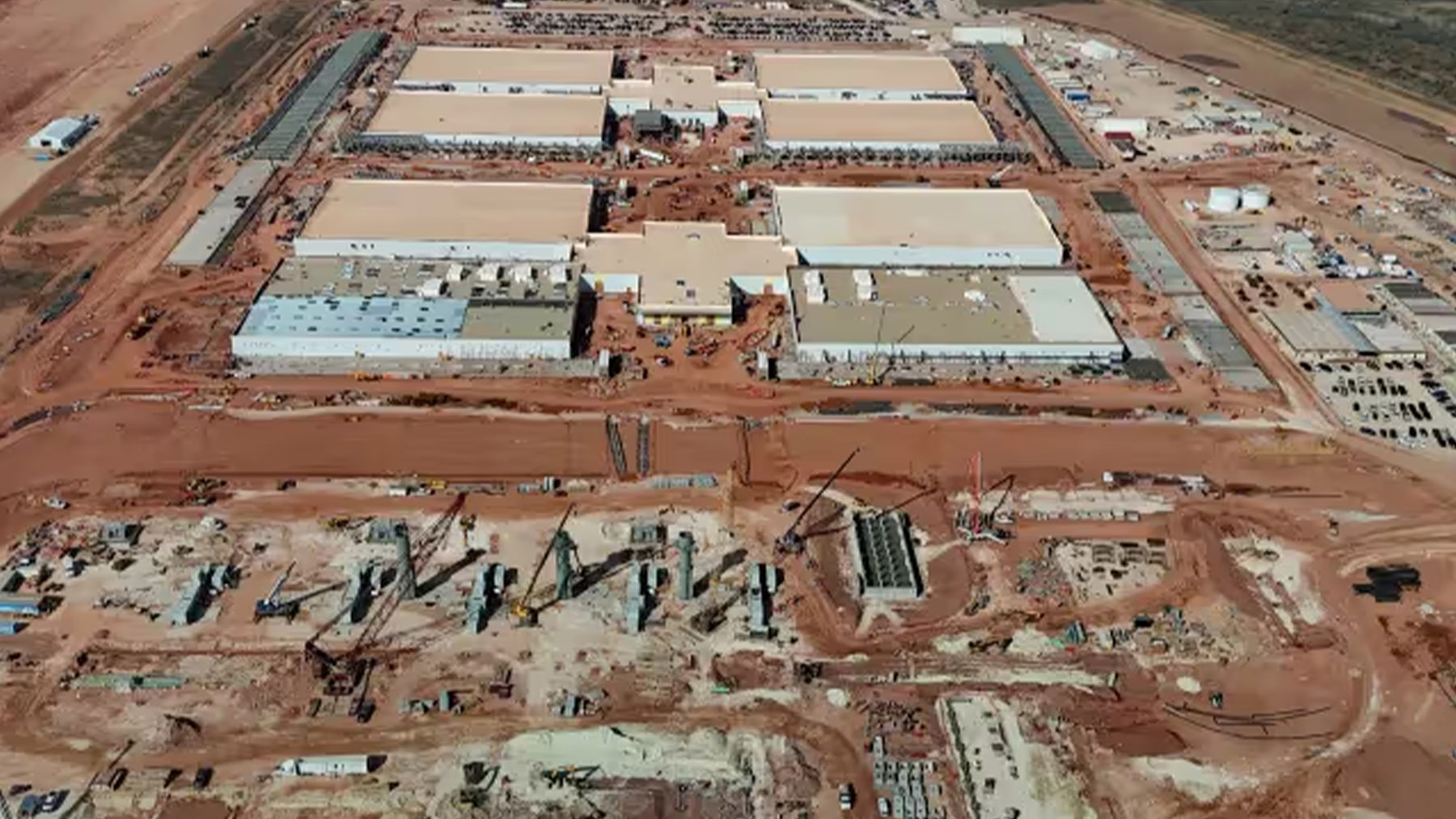
 Crusoe is building a new 900-megawatt AI data centre campus in Abilene, Texas, for Microsoft, marking one of the largest single-site expansions tied to the race for artificial intelligence computing capacity in the United States. The project adds two new buildings and an on-site power plant, and lifts the full projected capacity of Crusoe’s Abilene footprint to about 2.1 gigawatts. Crusoe said land clearing and site preparation have already begun, with the first building expected to be energised by mid-2027.
 The move underlines how large technology groups and infrastructure developers are shifting from experimental AI deployments to industrial-scale buildouts that depend on securing power, land, construction capacity and long-term customers. Microsoft’s role in the new Abilene phase also signals a change in the make-up of tenants at the site. Reuters reported earlier this week that Microsoft had agreed to rent a large Texas data centre project that had originally been developed for Oracle and OpenAI, while a source said OpenAI’s existing agreements with Oracle were unchanged.
Abilene has become an increasingly important node in that contest. Crusoe had already been developing a large AI campus there, and in 2025 said the second phase of the original site would take total capacity to 1.2 gigawatts across eight buildings. The newly announced Microsoft-backed expansion sits adjacent to that infrastructure and takes the combined site to a scale that places it among the biggest AI-focused data centre hubs now under development in the country.
For Microsoft, the Abilene commitment fits a broader strategy of locking in the physical infrastructure needed to support products such as Copilot and the cloud services that underpin generative AI. The company has been spending heavily to keep pace with demand for advanced computing, even as investors watch whether returns can keep up with the scale of capital being deployed across the sector. Reuters reported in February that Alphabet, Amazon, Meta and Microsoft together were expected to invest about $650 billion in AI-related infrastructure in 2026, while Breakingviews said the more immediate risk for the industry may not be weak demand but the difficulty of turning record budgets into functioning data centres quickly enough.
The timing is also notable because it reflects a more complex relationship among Microsoft, OpenAI and Oracle than the simple partner narrative that dominated the first wave of generative AI investment. Associated Press reported that OpenAI chose not to proceed with further expansion in Abilene and instead pointed to other US locations, including Wisconsin, while Microsoft stepped into the extra capacity. That does not mean the broader partnership web has unravelled, but it does show that companies now want greater control over where and how they secure compute, especially as model training and inference needs diverge.
Power is at the centre of that calculation. Crusoe said the new Abilene campus will include its own power plant to support grid resilience, a feature that is becoming more common as developers try to accelerate timetables and reduce exposure to transmission bottlenecks. Reuters reported this month that US power demand is expected to hit record highs in 2026 and 2027 as AI, data centres and other electricity-hungry uses expand, and that stronger data-centre demand could increase reliance on gas-fired generation over the next two years. Another Reuters analysis in February said dozens of planned data centres are now considering or pursuing their own power plants, largely fuelled by natural gas.
That creates both commercial opportunity and political risk. Supporters of the buildout argue that large campuses bring investment, skilled jobs and a stronger digital backbone for the wider economy. Local reporting in Abilene has described the broader campus as one of the city’s biggest-ever investments. Yet the use of dedicated gas generation is drawing scrutiny from environmental advocates and policy observers who say the AI boom could entrench fossil-fuel infrastructure just as many companies are also promising cleaner energy pathways. AP said future ambitions at Abilene include cleaner energy integration, but concerns over emissions and local grid effects remain part of the debate.
Crusoe’s own trajectory helps explain why it has emerged as a key player in this buildout cycle. The company was known first for using stranded energy to power bitcoin mining before repositioning itself around AI infrastructure, a shift that mirrors a broader market migration from crypto-era power strategies to the compute-intensive demands of model training. Abilene, originally pitched in part through that earlier energy logic, is now being recast as a large-scale AI factory. The project’s scale, combined with Microsoft’s willingness to anchor it, suggests that developers able to offer speed, energy planning and expandable campuses are moving into a stronger negotiating position.
Topics
Technology